Saturday, December 18, 2021

Pumpkin-Spice Cookies

 Here at A Book of Cookrye, we believe it's always pumpkin spice season in your heart, any time of year, if you truly believe. And so, as the grocery store plays relentlessly festive music which hits the ear a bit differently as prices rise, we are bringing the flavors of autumn into our kitchen. Which brings us to... cookies! We wanted to have our pumpkin spice in cookie form, and decided to swap out the title ingredient in the banana cookies we liked enough to make multiple times. After all, canned pumpkin is about the same texture as blenderized banana.... right? 

Pumpkin Spice-Oatmeal Cookies
1 c sugar
½ c shortening
½ tsp baking soda
¼ tsp salt
1 tbsp pumpkin spice
1½ c flour
1 c canned pumpkin
1¾ c oatmeal
½ c nuts if desired

Heat oven to 350°. Line a cookie sheet with foil and grease it.
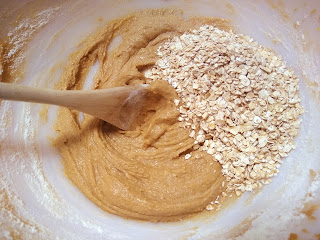
Beat together the sugar, shortening, soda, salt, and spices. Mix in the flour (it will be sandy). Add the pumpkin and oatmeal, mix well.
Measure the dough into 1-tbsp portions. Roll them into balls, and press each one flat in your hands. Bake 12-15 minutes (I only needed to bake for 12). Separate them from the foil while still warm (you may need a spatula).
These cookies aren't as well-suited to leaving out on an open plate- they will go stale. Put them in a sealed container as soon as they're cool so they keep fresh.

adapted from a recipe by Mary Skurka (Whiting, Indiana), Anniversary Slovak-American Cook Book, First Catholic Slovak Ladies' Union, 1952

Today, we are using the last of the shortening.

I don't know what unnerves me more: that we bought a 3-pound can of shortening, or that we (gradually) ate it all. Anyway, in the comments to the original recipe, Freezy noted that they were a lot easier to make in a food processor. I keep forgetting that one can use a food processor because I haven't had access to one until very recently, but I'm game!


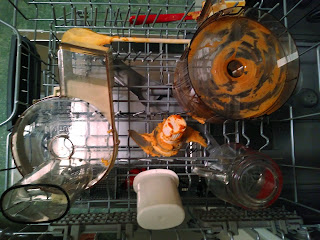
Indeed, we had these cookies mixed up in mere minutes. We had no frustrations with keeping sandy, dry ingredients from flying out all over the kitchen. Just like those gushingly ecstatic advertisements promised in the 1950s, we had cookie dough at the press of a button.  However, you should know that a food processor requires a big commitment of rack space in the dishwasher.

I firmly believe that if you have to rinse your dishes, your dishwasher is broken.

 The pumpkin cookie dough was a little bit stickier than the original banana cookies.


They baked up fine, though they were a little bit more cake-like than cookie-like in texture. Despite the big scoop of shortening and other diet-killing ingredients, they reminded me a lot of the desserts you get from a place that still substitutes carob for chocolate. To my further disappointment, a lot of the pumpkin flavor baked out. You could easily compensate for this by really putting the "spice" in "pumpkin spice." But even then, they would just be spice cookies with a little bit of a pumpkin undertone. 

So this didn't live up to my autumn dreams, but they weren't too terribly bad either. This just means more attempts are needed so we can have pumpkin spice cookies.

Wednesday, December 15, 2021

Hump-Day Quickie: Those no-bake cookies it seems all my friends made

 Sometimes it seems like I missed out on culinary experiences that all my friends had growing up (well, the ones who like to cook). My mother never bought me an Easy-Bake Oven, something I never thought about until I was much older (and after seeing these two grown adults attempt to bake in one I'm glad I never got an Easy-Bake when I was in Hasbro's target age demographic). And, more relevant to today, it seems half of my friends' first recipe they made (mostly) by themselves was this:

No Bake Cookies
2 c sugar
½ c butter
½ c milk
¼ c cocoa powder
3 c instant oatmeal (or 1½ c each oatmeal and shredded coconut)
1 tsp vanilla

Have several sheets of greased foil or waxed paper ready.
Boil the sugar, milk, butter, and cocoa powder for 1 minute. It should reach the firm-ball stage. Remove from heat and add the oatmeal, coconut if desired, and the vanilla. Drop by the tablespoon onto the foil and let set until firm.

Source: Jerita Wadley, Simply the Best: Recipes from the First Methodist Family with handwritten revisions

If my mother ever made these I don't remember it, though an informal survey of my friends suggests that this recipe was (and probably still is) a popular go-to among parents who wanted a low-effort, single-pot treat for the wee ones. As tends to be the natural progression of things, a lot of my friends in turn made these as their first recipe, first helping to stir the pot and then doing it all by themselves.

When we were all still too young to drive, a lot of my friends would bring down a saucepan and a canister of oatmeal and make this recipe which they had memorized since their parents first allowed them to use the stovetop. I had no such nostalgia for these, and my opinion was somewhere between "eh they're not bad" and what Laura Shapiro said when she wrote that "a no-bake isn’t an actual cookie by any definition except the lamest. It’s a placeholder, an apologetic reminder that somewhere in this happy land there are cookies, but not here."

If you think Laura Shapiro is being too hard on an innocent cookie recipe, some context may help. You may remember our previous discussion of the First Lady Cookie Bakeoff, where a now-defunct magazine pitted the wives of the two front-running presidential candidates against each other in a cookie recipe contest. One year, Cindy (Mrs. John) McCain sent in this recipe, apparently taken right from the Quaker Oats website with the brand names hastily deleted from the ingredient list. Laura Shapiro was not savaging a back-of-the-box cookie recipe for existing among someone's frequently-used clippings or appearing on a table in someone's house, a potluck or a bake sale. Instead, she was noting that it was spectacularly out of place for nationally-published recipe contest. Though she does ask what a lot of us were thinking: "As for the staffer who decided that a no-bake was an appropriate choice for a baking contest, was this an act of chutzpah, domestic naiveté, or a mysterious passion for culinary oxymorons? You decide."

This recipe may have started on the back of a Quaker Oats can, but it has certainly gotten deep into our culinary psyche. It shows up in nearly every fundraiser cookbook from the last twenty years. I say this because as soon as I started making these, I was inundated with helpful corrective commentary from everyone in the house. Actually, I got recipe changes before I even got anything in the pot in the form of handwritten recipe annotations. The peanut butter was taken right out of the recipe and replaced with dairy butter. (Always follow the handwriting in a compilation book.)

Great offense was expressed at pouring the mixture into a pan instead of dropping it by the spoonful like chocolate-oatmeal pralines. I was informed that "when I was growing up, Mom did something with cold water whenever she made these." (Apparently boiling times can't be trusted; use cold-water candy tests instead.) And only after extensive discussion was I allowed to follow a suggestion from The Nostalgic Cook (whose Osgood Pie was easily the most delicious Pieathlon we've had to date). She removes the peanut butter, as does the person whose editorial pencil passed over this copy of the recipe.  She also adds something else:


Yes, we are using half oatmeal and half coconut. You can't really see a difference after the chocolate has subsumed them.


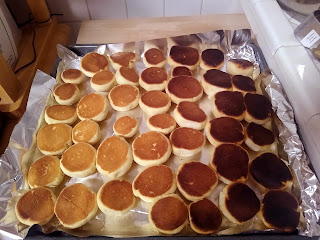
One thing I do like about not baking cookies: you don't need to come up with enough pans to hold them all. You can just unroll several feet of aluminum foil right onto your countertop. Here we can see the happy finished result, with a few coconut shreds sticking up at an oddly jaunty angle:


I'll be honest, I think the peanut butter is what held this recipe back. Omitting the peanut butter improved the cookies so much I am surprised the official recipe still uses it. Making the cookies peanut-free eliminated that peculiar mushiness that I never really liked. Anyway, these never had enough peanut butter to hit the right flavor, just enough to interrupt the chocolate. Without it, these are now a really nice way to bring more chocolate into your life. And if you like coconut even just a little bit, you will be very glad you added it to these too.

Sunday, December 5, 2021

Lemon-Beer Pie because why not?

Now that grocery stores across the nation are mercilessly playing aggressively festive music on the PA and decking the displays with several plastic refineries' worth of artificial pine, 'tis the season for beer!

Dinner is Served 1972

I've seen this cookbook page make a few rounds on various articles about weird recipes of yore, but no one has made it that I know of. We had a close call a while ago when it shared a cookbook page with the peanut-and-beer pie Yinzerella made for the Pieathlon. The pie lodged itself in my mind. I had to know.

Lemon-Beer Sponge Pie
1 unbaked 9-inch pie shell (the recipe doesn't specify a deep-dish pie, but you should)
4 eggs, separated
¾ c sugar
¼ c flour
3 tbsp butter or margarine, softened
2 tsp grated lemon peel
1 (12-oz) can or bottle of beer
2 tbsp lemon juice

Bake the empty pie shell at 450° for 10 minutes. Then reduce oven to 350°.
Put the lemon peel and half of the sugar in a separate bowl, rubbing it between your fingers until the peel releases its oils and makes the sugar yellow with a strong lemon smell. Beat this with the flour, butter, and yolks. Mix in the beer and lemon juice.
Beat egg whites until foamy. Gradually add half the sugar, beating until stiff peaks form. Fold into the rest of the ingredients.
Bake for 50 minutes or until set. Cool to room temperature before serving.

All-Time Favorite Recipes from Culinary Arts Institute, 1981 via Dinner is Served 1972

That recipe note almost seems like an apology: "The beer flavor is subtle." Did some beer company come to the Culinary Arts Institute, commission a book called Sixty Sensational Recipes featuring Orwigsburg Ale, and demand a chapter of desserts? Did this pie happen after the Culinary Arts Institute's beleaguered home economists spent several tear-salted nights in the test kitchen trying to come up with a non-revolting recipe for pink beer cookies?

I sent the recipe to a lot of friends and got a surprisingly mixed response. Herewith is a sample:

Before we got to the beer-related fun, a pie crust had to be made. Here I had my first doubts about the recipe because the instructions got a bit weird: we are instructed to partially bake a pie crust and then immediately get the oven a hundred degrees colder for the pie itself. That seemed like a spectacular waste of energy and also like we'd be hanging out in front of an open oven for a long time waiting for the temperature to come down. In reality, the oven only needed a minute or so to cool down from crust temperature to pie temperature. Nevertheless, my suspicion that no one tested this recipe would persist for the rest of the endeavor.

At least it was a bit chilly out, so dumping all that excess oven heat into the kitchen just added coziness instead of insulting the air conditioner. Also, these days it seems every pie crust I make has a little rip right on the edge of the pan. 


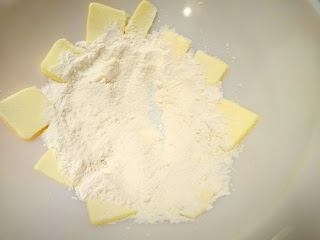
Next, we cut the butter up into little slices and left them in a mixing bowl to soften. Then, eggs had to be separated. As a result, a lot of bowls were populating the countertop at this early stage. Lastly, we got to one of the title ingredients: the lemon. I don't have a zester or a paring knife, but a coffee grinder (that rarely sees coffee) resides in the kitchen.


In just a short time, the lemon peels had dyed the sugar yellow. A wonderful lemony smell happily skipped to my nose when I popped off the grinder lid.


I found a really nice two-part lemon juicer in the back of one of the cabinets, and it did an absolute bang-up job on the lemon. I only needed one lemon to get the requisite two spoons of juice for this recipe. The juicer left both lemon halves nearly dry. I would never have expected that kind of performance from something looks like cheap plastic.


At this point, the recipe looks like a perfectly normal dessert. All we have in our bowl is butter, sugar, and flour. The recipe just has us dumping everything into the bowl all at once, but I feared little lumps of butter and flour floating in an alcoholic egg yolk ooze.  Maybe it would have mixed fine, but I think I would soon have wanted a blender. Again, did anyone actually try to make this recipe using their own instructions before sending it to the typesetters and printers?

I should have stirred the sugar and flour together to dispel any little glutinous wheat clumps, but I forgot. So I just finger-mixed it a bit before using a spoon to knock the butter into its two white powdery friends and stir. 
 

It looked unpromisingly lumpy at this early stage. But as we all know, recipes often don't look right at the beginning yet turn out perfectly fine.

I thought maybe these need just a bit more liquid to properly mix, so I dumped in the yolks. I figured they should go in first so that the thick sugary flour stuff could break up any egg bits that might want to evade the spoon instead of mixing. After a good hard spoon-beating, it looked like a big blob of mustard. I didn't think the yolks would add such a bright yellow after diluting them so much with the other ingredients.


At this point, I want to note how puny that little splash of lemon juice looked on top of everything that was already in the bowl. 


At this point, it should have started to taste like the lemon pie the recipe promised. However, it was rather bland. Two tablespoons are not enough lemon juice. Then I remembered the lemon peel and sugar that still waited, forgotten, in the coffee grinder.


The resulting pie-in-progress was delightfully tart. If you're following along at home, don't omit the lemon rind- it adds a good deal of the citrusy flavor. Without it, the pie will definitely taste like something's missing. So far, everything seemed to be coming out wonderfully (even if this pie demanded a lot of bowls).


All right, it is now time to bring out our star ingredient. Today, we are making a lemon pie full of this:


To give the recipe a fair chance, I got a beer I actually like. As I dumped it in, I already was thinking about future recipe revisions. If this recipe generated a successful pie, I was going to revisit it with hard cider instead. Lemon and apple seems like a much better pair to dump a lot of sugar on than lemon and beer. 

But enough stalling- are you ready to see me ruin a pie?


The more I look at this picture, the more it seems perfect for this pandemic. What could be more appropriate than dumping an entire bottle of beer into a pie on a countertop covered with multiple packs of face masks and marshmallows? 

Let's get a good look at the foam that came up in the pie pan and refused to dissipate. It looks oddly milky for a pie whose only dairy is three spoons of butter. Keep in mind we haven't mixed anything yet. The beer is just sitting on top looking a bit out of place.


When we stirred it in, the foam persisted. But where we previously had a happily lemon-flavored and cheerfully-yellow mixture, we now had a watery beige twelve-ounce puddle. If you pushed the foam aside with a spoon, you could see the hopelessly runny fluid below. It was the color of the computers we had in the nineties.


You know what, let's put this beer mess aside for a moment and beat some egg whites with sugar. Beating egg whites is such a nice, normal step in desserts. Nothing looks weird here, we're just making a meringue like we so often do in normal, beer-free things. Just ignore the bottle cap and beer opener. 


As aforementioned, I was skeptical that this recipe had been thoroughly tested before publishing. Having gotten all of the sugar into the egg whites, we are told to beat until we get stiff peaks. As a refresher, this is what a stiff peak looks like:

This is from when we made kisses.

But no matter how long I beat and bashed the egg whites, this floppy thing was the closest I got to any a peak. I think it was all the sugar the recipe tells us to put in. It seems like if you add too much sugar, your egg white peaks just can't support themselves anymore. I followed the recipe directions and this is the best peak I got.


 After a long time hoping the electric mixer could do even just a little bit more peak raising, I gave up and decided to mix our limp shaving cream into our beige suds. They actually combined very well. To the recipe writers' credit, this looks like every other sponge pudding I've made. You have this foamy stuff on top that bakes into this cake-ish top layer, and some very runny stuff underneath that sets into a custard. 


However, here I present my biggest evidence that the Culinary Arts Institute never tested this pie--- or if anyone did, their correction notes got lost. A pie recipe generally fills up one pie pan. If it makes way too much filling, there will almost always be a note like "Use a deep dish pie pan" or "This makes enough for two pies." However, when I tried to dump the filling into the crust, it threatened to overtop the sides of the pan and flood the counter with a sticky, beery mess. I didn't even get all of it poured in, but I still had to hastily grab a measuring cup with which to scoop a lot of pie back out. Maybe I was just a lot better at whipping egg whites than the Culinary Arts Institute and therefore had a much more voluminous lemon-beer pie filling, but I find it hard to believe that I am better all those people in the corporate test kitchen. Nevertheless, how could anyone testing out this recipe fail to notice that there was too much pie for one pan? Did they never try to pour their pie filling into a crust?


I thought about digging up some custard cups or something else to bake all this extra pie in. After all, I hate wasting food even if it is only technically edible. But then I thought to myself: Do I really want one and a half lemon-beer pies? I then dumped all the extra down the sink.

As the pie baked, it smelled like neither lemon nor beer. It smelled like bread in the oven-- and I mean really good  bread. Perhaps the beer flavor is subtle because most of the beer taste bakes out? I gave the pie an extra ten minutes in the oven just to be very sure that it actually set. Or at least, if it didn't set I could blame the recipe for faulty baking times. However, upon removing it from the oven I saw a weird boiling liquid around the bottom. Some further examination of the pie pan showed that the entire underside of the pie had this weird brown residue that had seeped through the crust.


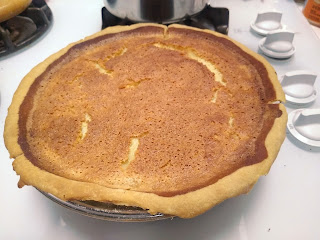
However, the top of the pie didn't look so bad. At this point, we left the pie overnight. Maybe the recipe tells us to serve at room temperature because the pie will reabsorb all these leaking fluids as it cools.


It smelled like a pie pan of beer. At the rate the pie emitted beer fumes, I thought it would surely have no beer flavor left by the time it cooled. But when I cut myself a cautiously narrow slice the next day, it tasted like pie pan of Yuengling with lemon. If you like lemon in your beer, this could be the pie for you. But to the recipe writers' credit, we got the multilayered, cake-over-custard concoction they promised us.


One other person who tried a slice said "Hmm." Then he paused thoughtfully, and said "It's not bad. You can hardly taste the beer. It could use some more lemon though."

We lived with this pie for three days. It grew on us. At first I kept eating it to see if it really was as weird as I thought it was a few minutes ago. I wasn't the only person voluntarily partaking of the pie- it steadily diminished in my absence. It was weird yet oddly good--- if you like the beer you dumped in it. However, do not think you can serve this to people without first telling them what's in it. No one's going to beg you to divulge the secret ingredient that gives your pie that extra special flavor. It tastes like lemon and beer.

And so, to conclude this recipe, I have to share the perfect to music to put on your record changer when making and serving this pie:

Never has polking looked so action-packed.

Thursday, November 25, 2021

Happy Thanksgiving from A Book of Cookrye!

 Well it seems like we've collectively decided that the pandemic is over-ish. It also seems a lot of my friends and acquaintances are having merry gatherings with their also-vaccinated nearest and dearest, and we at A Book of Cookrye are no exception. This year, we were asked to make the rolls to go with dinner. Which we did. The entire batch was perfect on top. But if you turned them over, you could see a perfect demonstration of how unevenly the oven cooks.

That is not a shadow over the pan.


If you're not the person saying "I spent all night waiting for these to rise!" you might think it's really neat to see such a perfect gradient from lightly browned to a perfect charcoal black.

I thought about severing the tops of the burnt ones and turning them into croutons or something, but for once I just threw them out. This caused much relief in a household that has seen some increasingly suspicious attempts to repurpose culinary failures.

I think it's a pretty appropriate way to launch the first (not-)post-pandemic holiday season! Remember friends, get vaxxed if you haven't, and wear masks when you make pit stops during any long drive!

Thursday, November 4, 2021

The crispiest (attempted slice-and-bake) oatmeal cookies I have ever made

An interest was expressed in oatmeal cookies. I could have used the recipe in the big Better Homes and Gardens binder cookbook, but it uses only one egg in a recipe that makes like five dozen cookies. We do not have enough people to eat five dozen cookies in this house, (Well, we would definitely eat them all but I would have to start letting out everyone's clothes. If you do any sewing, you will know that letting out modern store-bought clothes usually involves coming up with a lot of extra fabric to insert into your to-be-expanded garment, which is a lot more work than making fewer cookies.)


Oatmeal Cookies
½ c shortening or schmaltz
½ tsp baking soda
¼ tsp salt
½ c brown sugar
½ c white sugar
1 egg
1 tsp vanilla
1½ c quick-cooking oatmeal
½ c nuts*
¾ c flour

Cream shortening, sugar, baking soda, and salt.† Add eggs and vanilla. Alternately add the flour and oatmeal, then stir in the nuts.
The recipe then tells you to shape the dough into logs, wrap them, and refrigerate overnight before slicing and baking the next day. I tried it and most of my cookie slices crumbled. If yours do the same, or if you want to save time, roll the dough into small balls and then flatten them between your hands.
Bake at 350° until just barely darkened around the edges, 8-10 minutes. Put in a tightly sealed container after they cool.

*I used raisins instead.
†I added a few shakes of cinnamon as well.

Source: Mary Fedor (Streator, Illinois), Anniversary Slovak-American Cook Book, First Catholic Slovak Ladies' Union, 1952

Now, a word about ingedients. The recipe tells us to use either shortening or schmaltz (viz. chicken fat). We decided to almost use schmaltz, except with a change of species.


Back in the Before Times, we used to get the extra-lean hamburger and skip draining it. Now we have this big tub of economization in the refrigerator. 

We've already found that beef fat doesn't add any meat flavor to anything (if it did, we wouldn't have put it in shortbread twice). The recipe says we should use chicken fat (or shortening). I don't think Mary Fedor would mind too much if we used cow fat instead. 


And here we have the proto-cookie sludge! After this point, I looked at how much flour this sugary gravy is supposed to receive and decided the hand mixer couldn't handle it. Also, at this point I added some cinnamon because I like that extra flavor in oatmeal cookies.


At this point, I reached into the pantry for the oatmeal and found that-- horrors-- we only had the instant kind! Surely this meant the end of our oatmeal cookie endeavors until the next grocery trip. A lot of recipe guides will tell you to use the quick-cooking oats in cookies but never the instant kind lest your oatmeal cookies die a horrible death. In my baking class, when we made a massive batch of oatmeal cookies for some faculty lunch, we were given dire warnings about how using the instant oats would ruin everything. 

Oddly enough, no one ever says why. Since we weren't going to put this half-finished cookie dough in the refrigerator until we could get the proper, Fornax-approved oatmeal for the cookies, we decided to bear the risk of oven explosions and whatever other kitchen disasters might ensue from the use of incorrect oats. (Fornax, as you either already know or are about to, is the Roman goddess of the oven.)

This may be the picture of culinary ruin.

Usually, recipes tell you to get the cookie dough completely mixed before adding the oatmeal, raisins, or whatever else. I always figured it was so you could tell whether you had any unmixed flour clumps before they hid themselves amongst the oatmeal. But this recipe tells us to add them alternately, and I'm not going to argue with someone whose recipe got accepted by the Cookbook Committee (always capitalized). 


With the last of the oatmeal, I added the raisins. I like raisins as much as those children who get them while trick-or-treating. I was especially disappointed after one of those how-to-eat-healthy talks I went to for the free food. The registered dietician told us that raisins are basically candy as far as nutrition is concerned, leaving me to think about how many times I could have just eaten chocolate instead. But I like raisins in oatmeal cookies. They add little concentrated spots of tartness that makes the cookies so much nicer. 


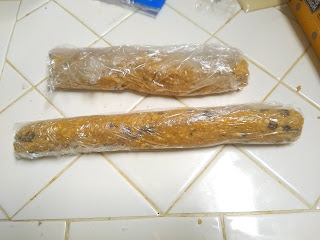
The recipe tells us that these are icebox cookies. I want to warn anyone following along at home that there is no dignified way to make a log of oatmeal cookie dough.


Making a slice-and-bake log of oatmeal cookies is about as embarrassing as baking brownies in a cornstick pan. I thought it was bad enough making brown logs of chocolate icebox cookie dough, but these are worse. If you make these, be sure to have a frying pan ready to swing at any attempters of scatological humor. Otherwise the jokes will get too repetitive for the unarmed.

I could more easily keep a straight face while making novelty bachelorette party dingledongle cupcakes than making these.


Depending on your perspective, these lovely logs were either worse or better when frozen enough to, er, stand on their own.


All this business of refrigerated cookies to slice and bake proved a waste of time. This is what happened when I tried to cut them.


A few cookies came out intact, but I shouldn't have bothered. You may be thinking I should have used a sharper knife, or a different shaped blade, or suchlike. I tried half the knives in the kitchen, from chef's knife to cleaver. None of them were any better. Perhaps this is the dire fate that befalls those who try to bake instant oatmeal. 

I cut up half the log before giving up and got a few intact-ish cookies that I had to very carefully lift onto the pan. I then rolled all the crumbled cookie dough into balls and flattened them between my hands. Because the dough was still hard from refrigeration, the oat flakes scratched at my hands a lot.


If we look at the only intact slices I got out of this, we can see fissure lines showing how they may not have broken apart but they really wanted to.


While the first batch baked, I got out the other dough log and cut it up to see if it would do any better than log no. 1-- it didn't. But at least cutting the dough up helped it soften enough to shape into actual cookies.


Honestly I think the rolled-and-flattened cookies came out better than the sliced and baked ones. They looked just a little bit nicer.

When we bit into one of these, they were the crispest cookies I've ever made. If you've ever stacked three Pringles at once and ate them, you can get a good idea of what we had made.


We could have used these cookies to record the sound effects for those aggressively perky commercials where Florence Henderson sang about frying chicken in Wesson oil. Seriously, when you bit into one of these it sounded like a Doritos ad. Because one of the other people in the house found this even funnier than I did, we have audio.


The Sound of Cookie Snarfing

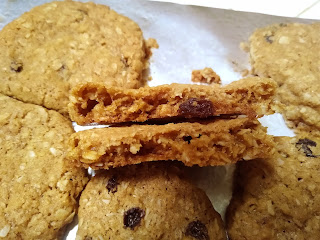
 You might think they were tooth-breakingly crunchy, but if we crack one open you can see they rose into thin flakes and layers. It was about one fourth of the way between cookie and something with phyllo dough.


I don't know if it was the beef fat or Mary Fedor's recipe, but these cookies are crispier than multiple fistfuls of potato chips. If you skip the refrigerate-slice-and-bake business and just shape them in your hands, you will love these cookies.