Thursday, August 7, 2014

Grape-Orange Upside-Down Cake, or You're not going to throw those away, are you?

You know, I actually sort of like finding things in the fridge that are just barely still good. It means I get to try out experiments on them that I'd never do with fresh stuff. If it's good, I've discovered something tasty. If not, well I was about to throw said iffy produce out anyway. For instance, I'd never do this to fresh grapes, but to ones that have ambitions to become raisins, I had no problem making this up.

Grape-Orange Upside Down Cake
¾ c butter, divided
1 c sugar
2 eggs
¼ c orange juice
1 tsp baking powder
1½ c flour
½ c brown sugar
Grapes

In a skillet or a deep layer pan, melt the ¼ cup of the butter and the brown sugar together. Then spray the sides of the pan. Cut the grapes in half and press them cut side up in the pan. You could cut them all in half in advance, but I found it easier to just have a pair of scissors in one hand and snip each in two as I picked it off the stem and put it in the pan.
Cream ½ c butter and the sugar. Beat in the eggs, then add the orange juice. Stir in the baking powder, then mix in the flour.
Pour into the pan. Try to get the batter to land all over it rather than just piling it in the center- this will make it easier to spread even. It needn't be perfectly level, but try to get it fairly close and to all the edges.
Bake 30-45 minutes at 350°.

Have I mentioned how much I fricken love upside-down cakes? They are awesome. The sight of that brown sugar/butter sludge stuff is one of the best things in the dessert-making world-- to me at any rate.
This is my happy place.

And this is where the grapes get brought in.
See? No one was going to eat them anyway. This isn't a loss, it's a gain.

I cut them in half thinking that the juice would ooze out as it cooked, mix with the brown sugar stuff they're sitting in, and make it amazing. I never wondered what color grapes are on the inside, but now I know.
Kinda looks like a mosaic, doesn't it?

As for the cake batter, I started with this. Because I figured orange and grapes would go together like brown sugar and butter, I added some juice. Then I decided I may as well add some baking powder and make it a bit less dense.
I love it when cake batter is this thick.

I don't know why people customarily bake upside-down cakes in a skillet, but this is why you don't do it in a round-sided frying pan:
Do you think the edges are done?

And now, it's time to be wowed!
I may have undergreased the pan a little.

Well, that was a failure. What is it with 1234 cake not photographing whenever I make it? Maybe unlike last time, an individual slice will photograph decently despite not getting out a plate which I'd have to wash.
Not lovely-looking, but illustrative.

The sight of the deflated grapes was promising- that means that the grape juice is now absorbed into the cake and the brown sugar stuff on top of it which theoretically meant this will be amazing.
However, the grape taste was pretty much gone. I have no idea where it went. But, the orange taste got stronger and was absolutely amazing with the upside-down cake brown sugar stuff on top. The grapes don't seem to make much difference, so leave them in or leave them out, this sucker is delicious.

Monday, August 4, 2014

Florentines, or Inadvertently Stepping All Over English Culinary Tradition

Guess who still has kidneys in the refrigerator from a Roman wine casserole!
Me, that's who. And while I might be inclined to chuck them out and pretend that offal never happened in my food, we're instead going to make something comparatively modern with them!


A Florentine of Flesh.Take the Kidneies of Veale and chop them very small with Corance, dates, sinamon and Ginger, Sugar, salt, and the yolks of three Egs, and mingle altogither, and make a fine paste with yolks of egges, and butter, and let there be Butter in your dishe bottome, then drive them to small Cakes, and put one in the dish bottom, and lay your meat in, then lay your other upon your meat, and close them togither, and cut the cover and it, when it is baked then strew Sugar and serve it out.
Don't you just love how the spelling isn't even consistent in the same recipe?
My take on this *:
Florentines

2 pork kidneys*
1-2 dozen dates, chopped
1 heaping tbsp. minced fresh ginger
⅓ c raisins
⅓ c dried currants†
3 egg yolks
½ c sugar
Cinnamon to taste (be generous)
Pie crust dough‡

Grease 10 holes in a cupcake pan well and line them with crust.
Finely chop the kidneys, or if it proves too difficult since they slip all over the place whenever you try to put a knife to them, use a blender. Mix the kidneys and everything else up. Put into the crust-cups, leaving space for them to boil and bubble up as they bake.
Cut out lids of pie crust and put them on top of the pies, dipping your finger in water and wetting the rims of the cups to glue the tops on. Cut vent holes in them.
Bake at 350° until a meat thermometer registers 160°.§

*No one in my vicinity sold kidneys from a cow, whether it was a calf or an adult. Hopefully this didn't fundamentally ruin the recipe in ways I don't realize since I can't compare them.
†Just chop some raisins into tiny bits (or put them into a small cup and have at them with scissors) - no one will know the difference.
‡I'm not writing out the instructions for this. I failed at making it so I don't think I ought to.
§Bake it less if you like, but since some of the meat where I shop is changing color I don't undercook it.


Note: I said comparatively modern. Just like Cleopatra's reign is nearer to our time than to the building of the great pyramids, so too is this recipe nearer to now than when Apicius was dumping wine into patinas. But you know what? I don't want to actually face the kidneys, so why not make the crust first?
I have no idea what the egg yolks are supposed to do, but there they are!

And now, to the fridge with you!

The last time I tried resting and refrigerating the dough first, it worked better than I could ever have hoped. Seriously, that dough was sturdier, more flexible, and all around better than the ones you buy, much less the crumbly ones I've been rolling out all this time. I don't roll out a pie crust so much as flatten the dough and make a pie pan-sized patch job. So, assuming the refrigerator has magic fairies who bespell pie crust if it sits there long enough for them to find it, I bagged it up and put it in! No more patchwork pie crusts! Ha!

I still didn't want to get out the kidneys (they look like animal parts and I don't care that I'm revealing myself as a ninny about this). Therefore, I decided to spend a really long time making sure I had everything else just so (let's never mind that I forgot to add the salt).
I'm always somewhere between surprised and amused at how many old Western recipes require a trip to the middle-Eastern grocery store. In the past, I've gotten things like verjuice, asafoetida, fish sauce, and rose water (which shows up in a lot of desserts up to at least the mid-1800s). Today, it's ginger, dates, and kidneys. We'll get to the latter one later. Granted, I have seen dates for sale at most stores, but they're boxed like super fancy foreign delicacies and priced accordingly. The same goes for ginger. I never bother with powdered ginger; I've dumped so much into things I may as well have used a measuring cup instead of a spoon--- and still not been able to taste it.
As tasty as dates are, I can't stop thinking they look like they'll start crawling off the plate.

I'd picked this recipe out as an interesting way to use up the remains of my Roman failure, and figured either this would be my supper or I'd end up getting dinner out of the microwave. It occurred to me as I was getting out the other things-- I think this is mincemeat. Why the heck are they calling it a florentine? Am I seriously about to make mince pies? After all my ranting about Christmas starting earlier and earlier every year, am I about to make some of the inevitable recipes of a country I've never been to? Whatever, it's somewhere around 11:30 at night and I still haven't eaten.
Dried fruits and ginger. Keep in mind this is a meat recipe.

The kidneys can wait because unlike last time I made a recipe that called for them, I did in fact find dried currants! Those would be the little black things on the plate. They are so tiny! I was really disappointed when I tried them though- they taste just like raisins. Now I know that next time I'm supposed to use currants to just put raisins in a little cup and scissor them to bits.

All right, we've put it off long enough. Time to open the refrigerator and get out the kidneys. I know it said veal kidneys, but the only ones I could find anywhere were pork. I do hope that isn't the ruin of me.
They were impossible to chop (they just slipped and slithered everywhere). A stick blender got involved. You know how sometimes what you're doing makes you question everything you've ever done to bring you to what you're up to at that moment?
Well, they did say to mince it finely.

Also, if you're going to use a stick blender on raw meat in a mixing bowl, set said bowl in the sink. Let me be the voice of experience here forewarning you of error and preventing kidney splats all over the place.
Anyway, time to add all the other stuff!
I know whenever I eat kidneys, I want them with lots of dried fruit and seasoned like apple pie.

Maybe I was supposed to just use a little of everything, but I didn't. And honestly, it smelled... well, the meat was strong with this one, but on top of it was the smell of dessert. It was good, so I'd like to think I was doing this one right.
Stranger things have happened.
Then I realized I was missing something:
They look so bright.

Yep, I nearly left out the one ingredient in this entire recipe that comes with an amount. I guess their purpose in this endeavor is to make them set.
Great, now it's even runnier.

All right, that's the florentine done. Now let's see if the refrigerator fairies did their magic on this pie crust like the last one!
Looks like they didn't.

The recipe says I should be encasing the meat between discs of crust by now. The phrasing's a bit tricky, but it looks like I should be making a few little pies and not one big one. Therefore, to the cupcake pan!
There was a lot of work turning all those little crust pieces into this.

And here are my attempts at putting lids on top. While I had been planning for there to be vents on them, I'd hoped for something nicer than this. Thinking of how easy it was to mess with the crust for the patina, I'd actually imagined cutting out pretty designs. You can kind of see a progression as the dough gets less and less brittle, so maybe if I'd had enough to keep going, I could have started cutting out something better.
You know those Pinterest "nailed it" pictures?

As I am presently without a meat thermometer and really not in the mood for getting sick off of an undercooked pig kidney, I baked this for 45 minutes. It probably was a bit too long, but I'm not sick and love staying that way. When it was done, it smelled like a kitchen when a big dinner is underway and the roast and the apple pie are both partially made.
When the time was up, I opened the oven and realized the pan will be soaking overnight.
It is very odd when your kitchen smells like dessert and your pan has meatloaf drippings all over it.

And despite the butter I put in the dishe bottome, my florentines were not coming out. So I grabbed a fork and ate out of the pan. And...
It tastes like something you'd get cravings for. That's honestly the best way I can think to describe it. Meat taste under all the spices and raisins is unnerving at first, but I can definitely see how people would want this because they had it when they were little. And once you get past the "I've never had this before!" and "I don't know if this is dinner or dessert!" stages of confusion, this is really tasty.
It's really strange today because it's neither dinner nor dessert; it's kind of both but mostly neither. From what I've read, apparently main meal/dessert distinction came later in culinary history. The leftovers, scooped out of the pan, refrigerated well. Honestly, as weird as this was, I already kind of want to make it again.
And so, to close, here is the one that came closest to coming out in one piece:


* We at A Book of Cookrye makes no claims to doing this in any way that even vaguely resembles "period correct." Even if we did have the requisite background knowledge, we don't have the kitchen supplies. Oh, and I just figured out how to make footnote links that jump back and forth, which is awesome. I am amazed at myself for making the arrow after this sentence take you right back where you left off. ⤴

Sunday, August 3, 2014

Carrot Cake IX: in which we just start adding carrots to stuff

After the carrot brownies failed to become brownies, I thought about it and decided that the idea of a carrot cake in brownie form seemed like it'd be really good if it turned out. I started with a recipe for blondies. There's little to say about the making of. But I think that the pictures, though no better than any of the others I've put up, seem oddly prettier.

Carrot Blondies
¼ c butter
¼ c shortening
2 c light brown sugar
2 eggs
2 tsp vanilla
1 tsp baking powder
½ tsp salt
1½ c flour
3 pulverized carrots
Heat oven to 350°. Grease a layer pan.
Melt butter and shortening. Add the brown sugar. When mixed, beat in the eggs. Then, stir in the baking powder, vanilla, and salt. Mix in the flour, then stir in the carrots.
Spread in the pan and bake for 35 minutes.

Don't they look healthy already?
However, I could go on for a lot longer about how much I love blondies. I think they're just as good as brownies. They also go over really well whenever I bring them anywhere.
I usually stop at this point and eat some. If you don't, I'm very sorry.

In theory, this will translate to a carrot cake but with that dense, gooey texture of brownies. I also figured if nothing else, it'll be good however it turns out.
Eggs!

Everything measured by the spoon!


And it's blondie batter!

Had I stopped here and baked it, it'd have been absolutely wonderful. But today, I did this.
I feel slightly guilty about this.
It ended up with a sort of brownie top-crust in the middle, so I thought it might have worked.
I need a more subtle doneness-testing implement.
Then I sliced it and... it's a cake!?
It's fluffy and everything!
It was a few shakes of this and that away from being a dang good spice cake. It was really light, delicate, and nice. Although I am really confused by the reaction when I offered some to a friend. He liked it a lot, but thought there was oatmeal in it from the taste. Now I'm trying to figure out where that came from...

Friday, August 1, 2014

A trip to ancient Rome involves most of a wine bottle

Today on A Book of Cookrye, we present a special treat! Do you like wine?

Apician Patina

   Crust:
2⅓ c flour
Cold water
2 tbsp olive oil
Pinch salt
   Filling:
1¾ lb. mixed meats*
4 eggs
Pepper to taste
1 tsp. lovage†
1 tbsp. fish sauce‡
1 c strong red wine
1 c raisin wine§
Peppercorns
3 oz pine nuts

For the crust, mix the flour and salt. Add the oil and mix with your hands until it's evenly mixed together. Add the water a little at a time until it comes cleanly off the bowl. Wrap or put in a plastic bag and refrigerate at least an hour or two.
Grind all the meats. If using giblets, boil them for several minutes.
Beat the eggs with the oil. Add the pepper, fish sauce, and lovage. When mixed, stir in the wine. Add the meats and put over low to medium heat until warmed through.
Divide the crust into however many layers of casserole you figure on having and roll it out.
Grease a covered casserole and put a sheet of crust into it. Ladle some sauce on top, put in 3 or 4 peppercorns, and sprinkle with some of the pine kernels. Repeat this for all the layers and put a final sheet of crust on top of it all. Pierce the top with a fork.
Bake for 30 minutes at 400°, covering the pan for the first 20.

*the book suggests a mixture of chicken, fish, and "sow's paps" which I looked up and... people sold that?
†Since no one uses that these days (at least not around here), the usual substitute is celery leaves.
‡This was used most places we would use salt. It smells foul out of the bottle, but when cooked goes really mellow and nice- just ignore the stink when pouring it out.
§As you might expect when considering how many raisins you'd have to juice, this stuff is bloody expensive. I used more red wine since I already had the bottle out.


Apparently a "patina" is a dish of whatever sort of filling (sweet, savory, whatever) with eggs broken in to set it. I wonder if this has any relation to the word "patina" in its present meaning. Stranger things have happened. The word hearse comes from a long etymological chain starting at the Latin word for rake (the gardening tool, not the 17th-century dandy).
This comes out of this lovely book which I got out of the library. No, it's not out of special collections like these have been, but it was a nevertheless really fun surprise when I was going up and down the aisles waiting for traffic to let up so I could go home.

Ilaria Gozzini Giacosa writes a really eloquent introduction saying that Roman food does not resemble Italian food of today, and her husband wondering how they got along without tomatoes motivated her to begin researching what they ate. Furthermore (and I really like this sentiment), she did not seek to adapt recipes to modern taste but to present them as would have been served at the time.
As one would suspect when an empire takes up the entire Mediterranean coast and a lot of land reaching out in most directions, they did not eat really bland food and wait for the first shipment of tomatoes and chocolate. Which brings us to today's special ancient treat!
This recipe stood out to me when I was flipping through the book. Use of recognizable animal parts aside, the combination of ingredients seemed intriguing. Pine kernels? Wine? Fish sauce? I could see how it might add up to something tasty, but couldn't imagine what it would be like. Therefore, I had to find out. I figured of all the recipes in this book, this is one of the few that Apicius (the author of the Roman cookbook this came from) named after himself. You have really be proud of a creation to name it after yourself. I was so excited when I saw this, and was practically giddy when I finally could make it tonight.

Never made pie crust with oil before.

I've read that refrigerating pie crust for a while would make it roll out a lot easier and possibly make me revise my current method of rolling it into a sheet, attempting to lift it up, and sticking the little bits that come up into the pie pan until I've assembled a crust that lines it completely. That's why I made the crust an hour or so before I started the rest; it's got nothing to do with realizing we were out of eggs and running off to the store.


Stirring the flour and oil together yielded a few lumps that did not mix in. Setting aside the spoon and using my hand worked a lot better.
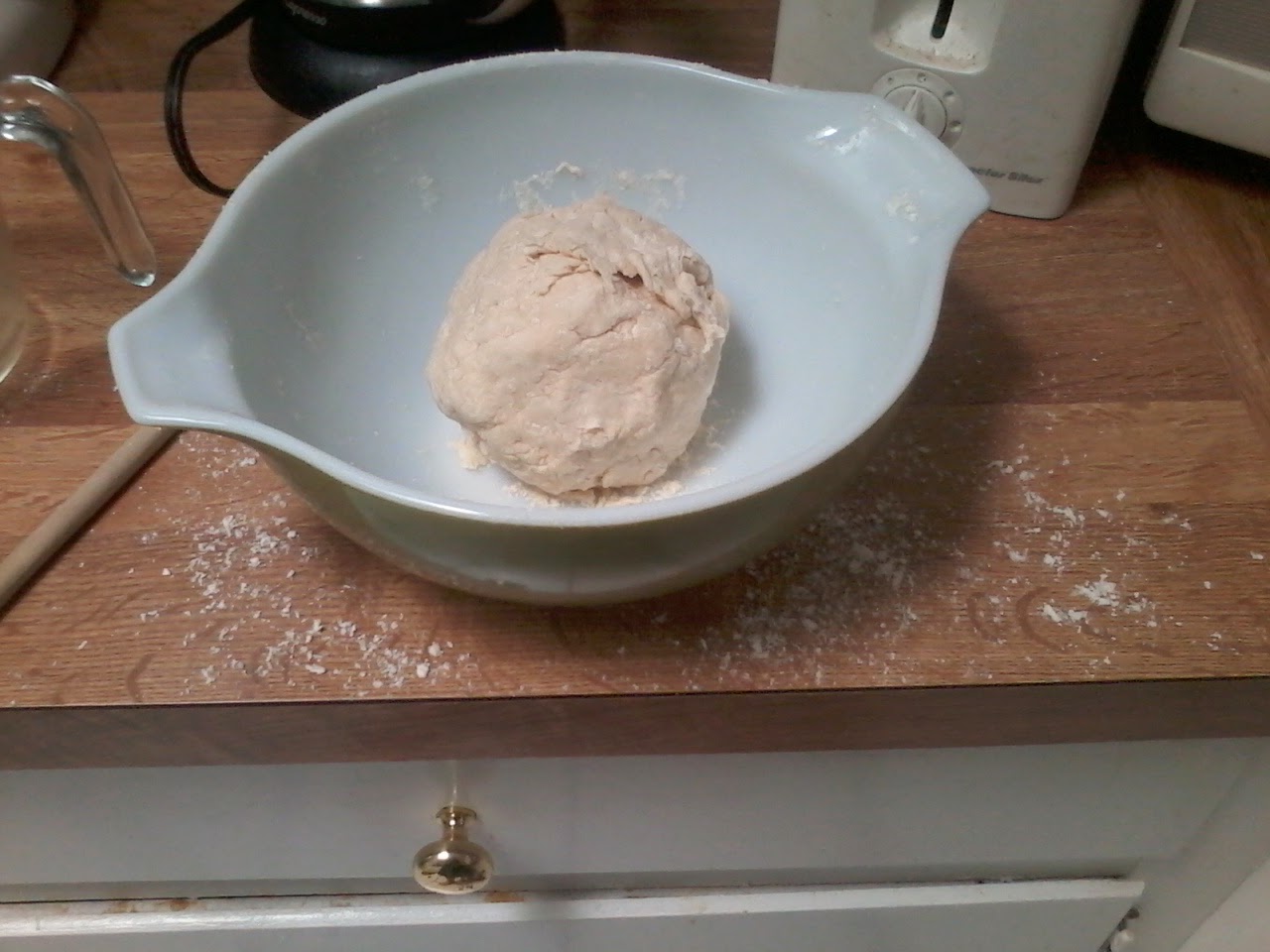
Behold, a lot less flour than I usually get all over the place!

That got wrapped in wax paper and shoved in the fridge to rest and do whatever it's supposed to do so it becomes easier to roll out. Meanwhile, the modern instructions said to boil whatever giblets I use "for several minutes." A suggested time or sign of doneness would have been nice.
Half a liver and two kidneys. Yay?
 All right, a brief detour. I'm not going to launch into an overview of Roman cuisine, but I will say that an awful lot of the recipes call for various animal organs. I don't mean they say things like "the organs will do if the meat cannot be used," they specify which should be used where. Relatively recent (as in 20 years or so) cookbooks still suggest using "variety meats" or "sweetbreads" to  stretch your budget. So I figured this recipe should be relatively easy to buy the meat for. Also, since I was already venturing into foods unknown, I figured I ought to really go for it and therefore use something besides the same ground meat that goes into everything.

Have you tried to buy liver lately? I'm going to guess no because none of the supermarkets sold any recognizable animal parts.
I blame recipes like this.
I even went to the really fancy one specializing in hard-to-find ingredients for fancy foods that has not just an in-house meat counter but a fricken butcher shop. There were none in the display, but maybe they have them in the back and were planning to, oh I don't know, grind them into sausages or something.

Me: "Do you have kidneys?"
"No, sorry."
(Being several stores into my search, I'm getting a bit astonished at no one having any, so this slips out): "What? Then who does?"
"I could special-order it for you..."

I'm not opposed to special-ordering things I really need, but I am not going to pay shipping and surcharges on a kidney.
Going to the Asian store, I did in fact find all manner of animal organs in the meat case, but they were shrink-wrapped into very large trays and the guys behind the counter would not divide any of them for me. And what if it turns out I don't like pig uteruses? What'll I do with the rest of the 1½ pounds of them?  So I ended up sticking to things I've heard of being used- they do steak and kidney pie in England, don't they? And... er, I've heard liver used to be common here? Therefore, I came home with those two.
By the way, I briefly considered taking a picture just to show I'm not making pig uteruses up but decided I did not want to be the person in the fricken grocery taking pictures of the shelves. However, for animals that have such large litters, they were really small.
Oh... brother.
But that aside, I'm trying to get over squeamishness over eating recognizeable animal parts, and figured grinding and seasoning the hell out of them was a good place to start. The last time I voluntarily ate liver was when I had my wisdom teeth yanked. The ensuing weeks prominently featured milk, Ovaltine, liver, and a blender.
I'm going to make a suggestion for anyone doing recipes involving turning whole pieces of fish into minced or ground fish. (Yes, I added fish. I kind of liked the "throw in a little bit of all the meat you'd have waiting to be used" aspect of this recipe so I pretended I had a lot of little meat pieces lying around from other things I'd made.) Do not do said mincing or grinding at the start. You will have raw fish radiating fish stink into the kitchen until you finally get around to using it. Just start cooking and don't even get the fish out of the refrigerator until it's time to use it.

Meanwhile, I couldn't get lovage so I used the suggested substitution of celery leaves. My sister-in-law got some celery for dinner a day ago and I snapped the leaves off and jammed them into a water glass before she used it.
Y'know, this looks like it'd have made a really good omelet.
Like the last time I made a meat casserole pie thing, I didn't realize how much a certain ingredient was used to excess until I measured it out. The original recipe doesn't specify an amount, but Ms. Giacosa thinks I should put this much in:

I will admit that this is the only substantial change I made to the modern recipe: it calls for one cup each of raisin wine and red wine. As logically follows from considering how many raisins one must use to make a bottle of it, raisin wine is really expensive. So I used red wine for the whole thing. I wasn't thrown by using this much of it at first. Another Roman recipe I've liked enough to repeat is chicken stewed in a covered pan of spiced wine. So I calmly dumped in the wine. It turned the eggs purple.


But this is where I start to get worried about the fate of my patina. The next step in the modern instructions was to add the meat and heat it up. It made sense- I figured this was to start the meat cooking so that it comes out of the oven fully cooked and safe to eat. However, I had made this little analysis before putting a pan of eggs, fish, and wine on the stove to heat. Have I mentioned the windows in the kitchen don't open?
As my cousin might say, "Who ate it before we did?"
At this point, I was beginning to fear for this creation. I felt strangely isolated. It's one thing to make food completely foreign to you- you can find books everywhere about it with pictures and detailed instructions to reassure you every time you wonder "Is it supposed to look/smell/taste like that?". But today we're making things that aren't just foreign by location but foreign by time. The one picture for this recipe (that was supposed to show the pan to use) is missing and there's no one I can ask "Does it usually look like this at this point?" So I proceeded on with nothing but one book to guide me through things the likes of which I've never made before which was too much for the one vent over the stove to handle.

It went from interestingly purple to sad and grayish too.

I'd figured the crust layers would soak up the excess liquid and be sort of like a pot pie, but I had my doubts upon seeing how runny this was. Look at that layer of crust sort of barely floating there:


Sadly for my ancient Roman fantasies, it looked terrible, and the pine kernels I was meant to sprinkle over it made it kind of unnerving. It looked like something was breeding in the fish wine.


Incidentally, refrigerating crust makes a lot more difference than I thought. I went from barely being able to lift a two-inch piece off the counter to dangling the dough over my hand like so:
That's my hand and about 6 inches of air between the bottom edge and the countertop.

Despite the unnerving smells in the kitchen, I thought the crust-making was absolutely spiffy. I even did the fork-piercing of the top layer while it was still on the countertop and could stretch it to expand the holes without it ripping!


However, my brief period of "Yay this works!" happiness ended when I had to put the top layer on and then get the whole into the oven. The recipe calls for 30 minutes at 400°, but being somewhere between cautious and paranoid about raw meat, I let it bake a lot longer and only removed it when a meat thermometer said the chicken (which has the highest cooking temperature of everything in there) was done.
The wine gravy had boiled up onto the top crust and dried there. Usually it's appetizing when all the lovely things in a casserole have welled up through the top and left deposits of tastiness on it, but somehow this looked...off.

Food fit for a Caesar?

I tentatively stuck a spoon into the edge and tried it. It tasted like solid wine. Even the fish (whose smell still hadn't left the kitchen from making this) wasn't perceptible. Maybe the raisin wine which is supposedly sweeter would have made a difference. Maybe, as my mom suggested, it would have tasted different to people who drank wine like we do water. But I'm more inclined to think that Ms. Giacosa got the measurements wrong. It doesn't make sense to add any of the other seasonings if you're going to put in so much wine you can't taste any of them. It was near-inedible to anyone who doesn't really love wine.
And the pine kernels still look... wrong.

And so, this was discreetly consigned to the trash. However, I'm still up for trying it with less wine. Also without the fish until I get the amounts right- I don't want that smell in the kitchen unless the finished food is worth putting up with it.

I then made this in an attempt to cover up the smell of fish.

Thursday, July 31, 2014

Carrot Cake VIII: You call these brownies?

Today we present the 8th carrot cake recipe I've perpetrated. Unlike Henry VIII who couldn't keep a wife's head attached, I'm just pulverizing more vegetable roots!

Carrot "Brownies"
¼ c butter
¾ c brown sugar
1 egg
1 tsp baking powder
⅛ tsp salt
1 c whole wheat flour
about 1 c shredded carrots (4 of them)

Heat oven to 350°. Grease a square pan.
Mix butter and brown sugar, beat in egg. Stir in baking powder and salt, and when mixed add the flour. Mix in the carrots last.
Pour into the pan and bake 30 minutes.
source

I usually like to make recipes out of books that have somehow or other made their way into my hands- looking up something specific just doesn't have the same element of surprise. But we at A Book of Cookrye have exhausted all the carrot cake recipes we have! So, hoping for brownies, we turned up this.

My carrots are hairy.

After this inadvertent (and surprisingly long!) series of carrot cakes, I really want to start a series on something I really like. Maybe brownies? Cheesecakes? Ice creams? Although if I'm going to do 8 recipes of the same thing, I want it to be something with a lot of room for variation. Although I do think I've found out why so many people don't like carrot cake: most recipes are terrible. Check out the overlap between the carrot cake and disappointing tags. And most of the carrot cakes sold are crammed full of walnuts despite no one I know liking walnuts in cakes. 
A cutting board of carrot hairs.

Since the carrots are sprouting anyway, I planted one in the yard. It looks to be doing better than the sprouted garlic bulbs which turned into stringy looking plants and then died.
If nothing else, most carrot cakes are really quick to mix up.

Partway through, I realized we'd run out of white flour.

Now it's good for you!

I actually had really high hopes this would turn into brownies. As with one or two brownie recipes
I really like, this ended up really thick.

However, we ended up with cake.
It's fluffy and everything.
It was kind of spongy, but it was a decent cake nonetheless. The wheat flour went surprisingly well with it. It was kind of bland, but a quick addition fixed that:

Peanut butter is good on so many things. One of my friends, while pregnant, took to eating slices of ham spread with it. I thought it was weird, but in its own way, it's really good. With that in mind, spreading it right out of the jar onto carrot cake is really normal. And honestly, while it's not at all brownies and not that great of a cake, with whole wheat flour it was really nice to have in the morning.