Saturday, February 18, 2023

Happy 9th anniversary to A Book of Cookrye!

Today marks nine years of delights, disappointments, and the occasional edible horror!  That's a trio of trios of years! To commemorate this big day, we're treating ourselves to the most surprising recipe we've ever found:

Graham-Coconut Layer Cake
1⅓ cup sugar
10 tbsp butter
1 tsp baking powder
¼ tsp salt
4 eggs
1⅓ cup milk
11 oz (3 cups) graham cracker crumbs
5 oz (1 firmly packed cup) shredded coconut

Heat oven to 350°.
Grease two 9" round cake pans. Cut two circles of parchment paper to fit the bottom of the pans, and press them firmly into place. Then grease the top of the paper.
Cream together the butter, sugar, baking powder, and salt. Mix in the eggs one at a time, beating each one in well before adding the next. Alternately add the graham crumbs (in three additions) and the milk (in two additions), starting and ending with crumbs. Then stir in the coconut.
Pour into the prepared pans. Bake until the center springs back when lightly pressed, about 20-30 minutes.
After they are completely cooled, remove from pans. (You may need to cut the sides loose). Put lemon filling between the cake layers and white icing on top. After spreading the lemon filling on the bottom cake layer, let it sit a few minutes to firm up before putting the top cake layer on it.

Note: If you want a firmer cake that slices more neatly, separate the eggs before beginning. Add in the yolks where you would have beaten in the whole eggs. Beat each yolk in thoroughly before adding then next. After you have added everything else to the batter, beat the egg whites until they're almost but not quite stiff. Then fold them into the batter.

        Lemon Filling:
6 tbsp sugar
¼ cup sour cream
2 tbsp lemon juice
2 tbsp butter

In a small saucepan, stir together the sugar and sour cream. Beat well to eliminate lumps. Add the remaining ingredients. If using a fresh lemon instead of bottled lemon juice, grate the rind and add it also.
Place over medium-high heat and cook, stirring constantly and scraping the bottom of the pot well, until it boils for 3 minutes. Let stand until it cools and thickens. (You can cool it faster by setting the pot in a larger pan of cold water. Stir the filling so that it all gets exposed to the cold sides of the pot.)
After spreading the filling on the cake, let it set and firm up for a few minutes before putting the top cake layer on it.

        White Icing:
About 4 tbsp butter
2 egg whites
⅛ tsp salt
Powdered sugar

Beat the egg whites, salt, and butter together. Add about ½ cup powdered sugar and beat until thoroughly mixed. Then gradually add more powdered sugar, beating well, until the icing is thick enough to spread. This cake is best with a thin layer of icing on it, so keep the icing soft enough to spread it thinly.

Sources: cake and icing from a handwritten note; lemon filling adapted from recipe by Mrs. Lawrence Hoerig of Mequon, Wisconsin

The surprise of this recipe is how we got it, not what's in it.

This could have been a hand-me-down recipe, except no one handed it down. Usually, when one has recipes from multiple generations back, they've been passed down and shared. Whether the recipes are written down or whether you learn to make them by helping your relatives in the kitchen, someone deliberately intended their progeny to learn. Or, if people don't get a recipe handed own to them, they reverse-engineer the foods they fondly remember from tables of yore. 

But in this case, none of my relatives recognize the recipe at all. I found this cake recipe in a box of unexamined family things, pressed between a lot of century-old studio portraits of people I'm probably related to.

Some readers will recognize this recipe from a relatively recent post. But since our anniversary happens to land on the end of the week (I di-d not plan this), it's the perfect time for a Second-Stab Saturday for a recipe I really liked. Purely for the heck of it, I posted this to a recipe exchange group and got the most delightful response:


The writing on the page reads like a note-to-self, except the way she wrote "over" on the bottom right corner. It's like she wanted to ensure that whoever found it would know that more instructions await on the back of the page. 

We made one change to the recipe: we rescaled it from 3 to 4 eggs. Now it makes two 9-inch cake layers. However, as much as I wanted to make a layer cake for our anniversary, I didn't want to eat the whole thing. As a compromise with myself, I decided to halve the recipe, cut the single-layer cake in half, and make a two-layer semicircle.
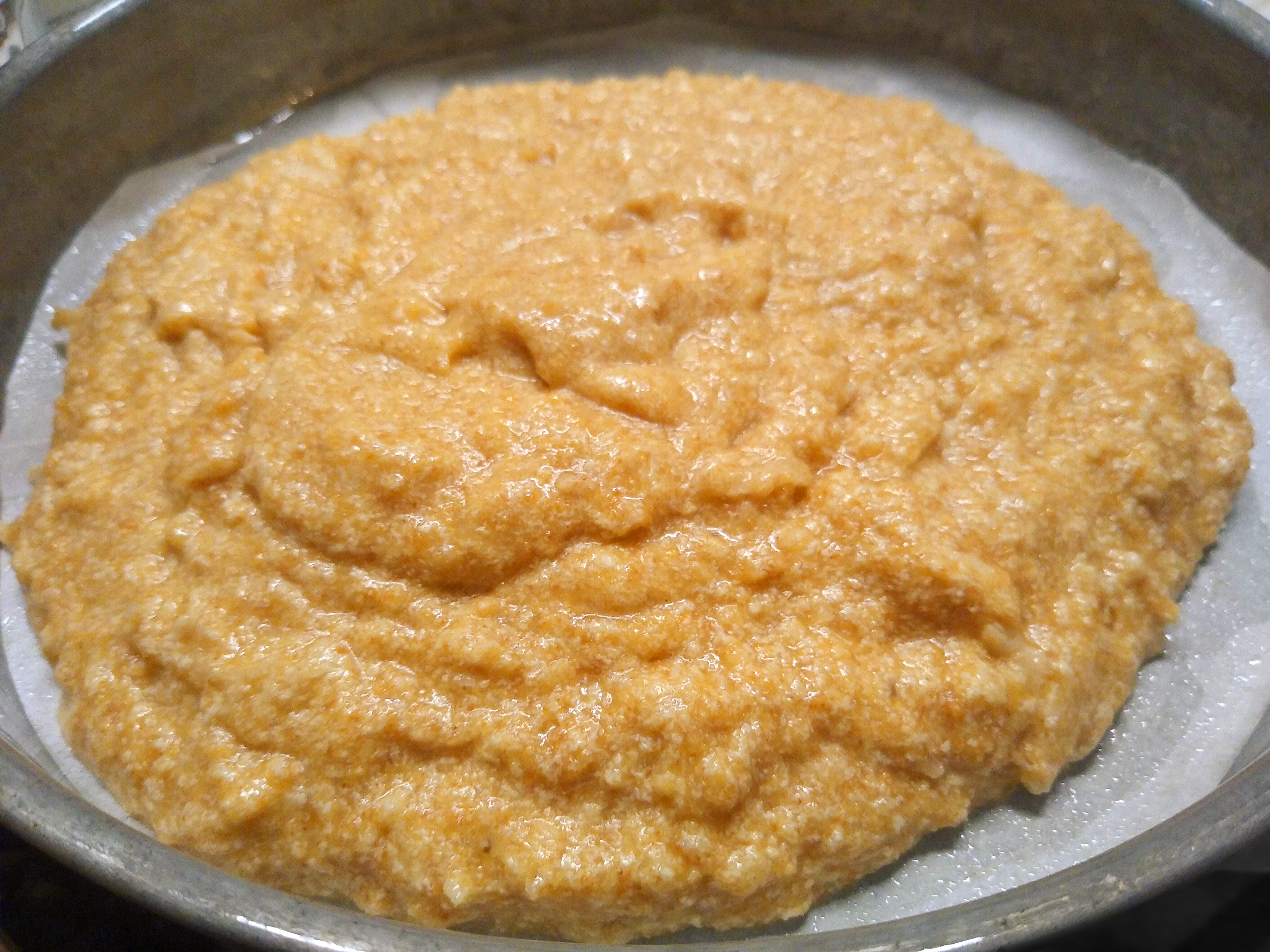
The batter looked unnervingly curdled after I finished mixing it, which is never a good sign. I was so convinced I'd ruined the cake that I re-checked my recipe math to make sure that I had all the ingredient amounts correct.After I confirmed that I had neither miscalculated nor mismeasured, I wondered if the one success we'd had with the recipe was a fluke. 

But the oven was already hot and the pan already prepared to receive batter, so I baked it anyway.  As I waited to see if I got cake or failure on the other side of the baking time, I couldn't help thinking about how this was probably a very economical recipe in the 1920s, which is when I think she wrote it down. But with the graham crackers, the coconut, and the lemons, it's a bit of a splurge today. That makes this cake feel really appropriate for our Anniversary of Cookrye. As they say, treat yourself.
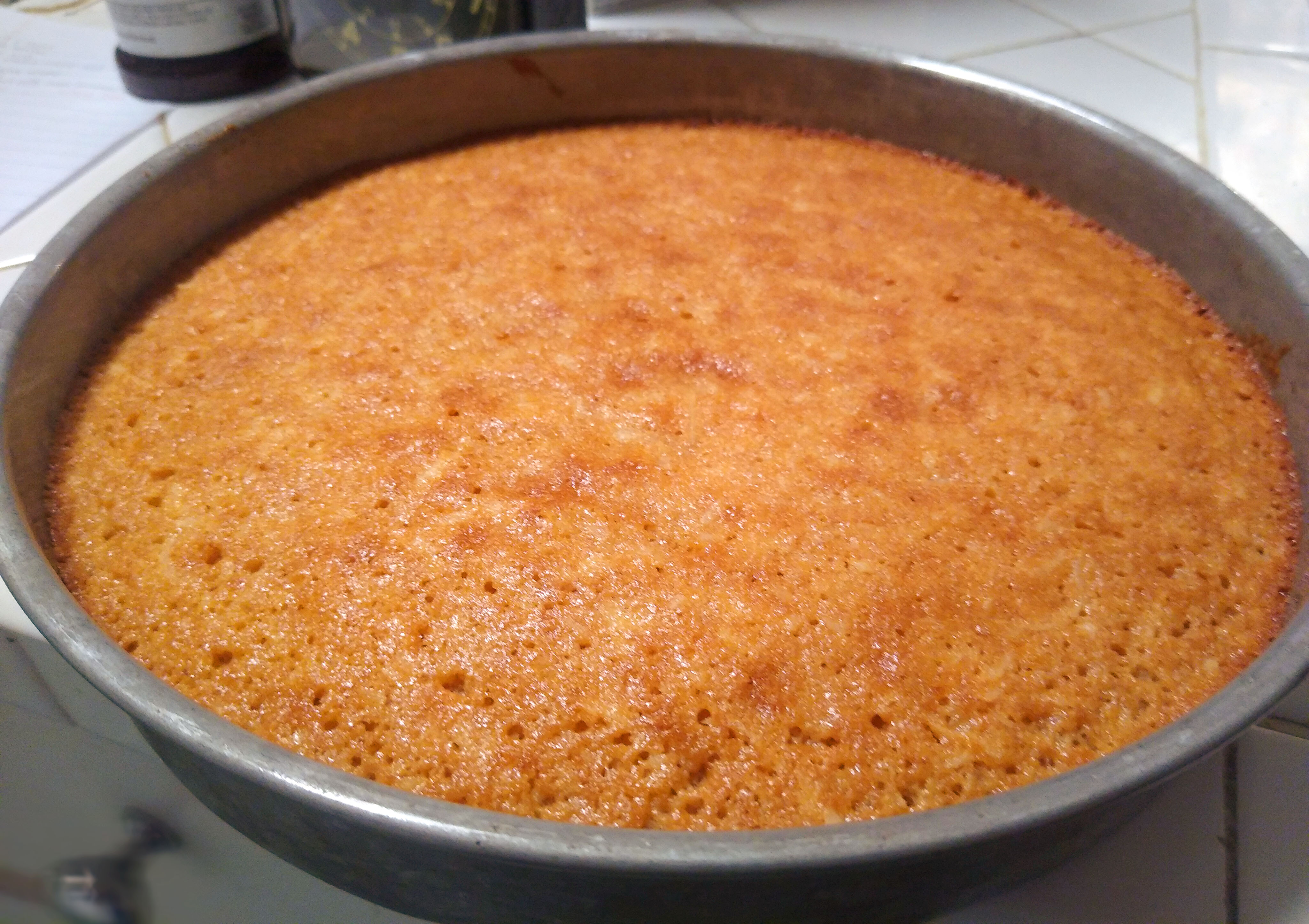
Despite looking like a surefire failure in the mixing bowl, the cake came out perfect after it baked. I discreetly cut out a tiny sample sliver to make sure it was good enough to commit to making the icing and lemon filling. It tasted like a graham cracker pie crust, only in cake form. Its firm yet light texture make me think of birthday cakes.

When it came to making the lemon filling, we didn't worry about tracking down a period-correct recipe this time. We simply took the glaze off the orange-coconut cake and used lemon juice instead. Since the original glaze went onto a cake covered with coconut, it should feel right at home between two cake layers loaded with those tropical white shreds.

To my happiness, the lemon filling actually thickened after cooking it as directed. And after leaving it on the counter to cool off, it firmed up until it was almost gelatinous. In other words, it was perfect for putting between two cake layers.

This may be my one mistake of the recipe: I thought that putting a lot of lemon in the middle would be far better than a parsimoniously thin layer. When I put the other cake on top, all of the excess lemon squeezed out anyway. Also, the two cake layers refused to stay stacked. The top one, lubricated by excessive cake filling, kept sliding off until I put a lot of toothpicks in there. But that's my mistake, not a faulty recipe. If you put a more reasonable amount of lemon filling in the cake, this should not be a problem.

And now, we get to the part of cake-making I always flub: icing them. This time, I forestalled my usual mistake of making too little icing. I thought that surely no visible crumbs would besmirch our creation with visible crumbs (as inevitably happens when I try to scrape too little icing across too much cake). However, we ran into two problems. First, we had to try to spread icing across the open surface of a cut cake without visible crumbs.

Our other problem was space. You need space to decorate a cake. As soon as you have to jam a spatula downward at an awkward angle so you don't knock over any clutter with your elbow, you're going to get a terrible-looking icing job. Second, it's just hard to concentrate on spatula technique when half of your attention is busy trying not to to knock over all the clutter that spawns on the counter when you leave the kitchen unattended. 

In the case of this cake, I could have gotten it to look a lot better had I frozen it, then put a thin, almost runny layer of icing on it, and frozen it again to make it very firm. But again, you need space to do that. All of our freezer shelves are currently loaded with food. Like a lot of people living in a post-2020 world, we keep a lot more food on hand because you never know when the supply chain will hiccup on you. Our freezer could not accommodate a layer cake.

I already knew our decorating wouldn't go well, but I just reminded myself of what my friend said on the subject:


I also reminded myself that usually, even a lousy icing job looks just fine once you've cut the cake.

I may not do the best job of spreading the icing. But I have to say that the egg-white icing that came with this recipe has become my icing of choice when I'm not pouring cinnamon icing on things. The egg white keeps the icing firm in a way that milk or water doesn't. Therefore, you don't need to put in gobs of butter or shortening to make the icing firm enough to use. This way, the icing isn't overwhelmingly rich. Instead, it's a sweet finish to a really good cake.

However, in the case of this cake, you want to perhaps make the icing a little thinner than you normally might. I laid it on a lot thicker than I probably needed to, and most people ended up discreetly scraping it into a little pile on the side of their plates. I'm thinking that you should make the icing just barely too thick to pour like a glaze. Then you could put just a light touch of icing on the cake instead of the generous amount seen here.

The cake was a lot better the first time we made it, when the icing was a thin topping as shown below:

With that said, this cake was so good that no one expressed dismay upon seeing me committing it to a typewritten index card. And by now, everyone knows that if I think a recipe is worth typing, it will appear again. I only put a recipe through the typewriter if it's good enough to take up permanent residence in the recipe box. In a subtle nod to the original recipe's writing style, I added a written note to turn the card over for further instruction. I also misread my recipe notes and therefore had to cross out a few numbers.

I am amused that I have used the words "heretofore," "tedious," and now "unpromising" on recipe cards.


In closing, this is a wonderful way to commemorate the start of a (hopefully) wonderful year of food! 

I'm going to attempt a special cooking project this year. Every month, I want to get out one recipe that I've been meaning to get around to making. Something that's been sitting in my notebooks for a while, a recipe that's long had a bookmark next to it in one of my cookbooks, or a recipe on a webpage I've had saved for longer than I've had my current laptop. May the good things be delicious, and the bad things be entertaining, and may the year bring happy surprises in a saucepan!

Sunday, February 5, 2023

New England Raisin Drops: or, Raisin-rationing for visual flair

They baited me with the words "New England" in the recipe name.

Philadelphia Inquirer Recipe Exchange, June 21 1935, page 12

New England Raisin Drops
1 cup sugar
¼ cup shortening
¼ cup butter
1 tsp baking soda
½ tsp salt
1 tsp baking powder
1 egg, well-beaten
1 cup thick sour milk, or buttermilk*
3 cups flour
Raisins
Cinnamon-sugar for sprinkling

Heat oven to 375°. Grease a cookie sheet. Cream the sugar, butter, shortening, baking soda, baking powder, and salt.
Add the egg. When it is mixed, add the sour milk and beat well. Then mix in the flour.
Drop by the teaspoon onto baking sheets. This dough doesn't spread. It keeps its shape as you put it onto the pan. So if you prefer more neatly-shaped cookies, roll them into small balls before baking.
Place three raisins onto each cookie, and press them into place. Then sprinkle the cookies with cinnamon sugar.
Bake 10-12 minutes, or until golden on the bottom. (You can also tell they're done when the raisins puff up like balloons.)

*You can also use sour cream.

Bertha Lyman Shellington, 3 West Park Avenue, Haddonfield, NJ; Philadelphia Inquirer Recipe Exchange, June 21 1935, page 12

These could have been named Raisin Drops. But Bertha Lyman Shellington called them New England Raisin Drops. With those two added words, these cookies became a tiny piece of that part of the country where they have beautiful colors in the autumn, quaint houses from the 1600s, and crowds of summer tourists making pilgrimages to the places named in the first chapter of their American History textbooks. 

Bertha Lyman Shellington tells us to use "shortening and butter, mixed" in the ingredients list. I've heard people say you get the best results in baking if you use both of them. Apparently, you get the flavor of the butter, but the shortening prevents the cookies from going too runny in the oven. However, I distrust shortening, with its unnatural whiteness and unnerving flavorlessness. Even cooking oil at least tastes like something. But we are going to follow the directions in the recipe, and blame the Philadelphia Inquirer if these are bad.

The creamed-together mixture was an odd color. It wasn't yellow enough to look right, but it wasn't white enough to look scientifically, artificially pure- the way anything made with shortening apparently should. 

At least the egg managed to make this a more normal-looking color.

The recipe tells us to use "thick, sour milk." Naturally, I used sour cream. The resulting mixture looked like cake batter and tasted oddly like a cheap cheesecake. By the way, that's not a bad thing.

After we had the cookie dough loaded with flour and ready to bake, it still tasted cheesecake-adjacent. It also tasted like it really wanted vanilla. 

The recipe next directs us to drop the cookies and bedeck them with the title ingredient: raisins.

Raisins bring out the weirdest things in people. Some people sanctimoniously give them out on Halloween, convinced that they are the vanguards in the crusade against candy.  Others passionately hate raisins every time they appear in otherwise good food. And if you're Bertha Shellington Lyman, you ration your raisins with mathematical precision. We are told to place exactly three raisins on each cookie. Three shalt be the number of raisins we shalt count, and the number of the raisins shall be three. Four shalt we not count, neither count we two, excepting that we then proceed to three. Five is right out.

I don't understand why we're supposed to be so rigorous with the raisins. If we were shaping the cookies into cute little crescents or using a cookie cutter, I can see how we might be more concerned with cookie aesthetics. But these are bumpy, charmingly-homemade drop cookies. I'd have stirred the raisins into the dough instead.

After I followed the written directions and did my best to achieve visually harmonious raisin placement, I thought the cookies would spread and come out of the oven looking like, you know, cookies. Instead, they ended up looking like the same dough lumps I had dropped on the pan a few minutes earlier. The raisins barely clung to the cookies, and fell off as soon as you touched one.

Did you ever see a sorrier sight?

The raisins tasted burnt and the cookies were too hard. I partially blame myself for this because I turned the oven too high. However, I only did that because Bertha Lyman Shellington specifically said to "bake in a hot oven." I reduced the temperature to a more moderate setting for successive batches, and also shaped the cookies into little balls instead of dropping them from a spoon. They came out looking like cute raisin poufs instead of like cookie clumps with raisin blisters.

Incidentally, I love how any cookies with raisins tell you when they're done. Without fail, the cookies are perfectly baked when the raisins puff up like brown balloons. (Don't worry, they deflate as soon as you remove them from the oven.)

These cookies are decent enough cake drops, but Mrs. George O. Thurn did them better. They had a nice texture: soft, fluffy, and ever-so-slightly dense. But they tasted like nothing. Would it have killed Bertha Lyman Shellington to add some damn vanilla? Weirdly, you could barely taste the raisins at all. Were they merely for presentation?

When you plucked the raisins off the cookies, they looked so much prettier. I haven't seen a recipe that was so much improved by removing the title ingredient since we made the pepper cake without pepper. If I make these cookies again, I might actually put five raisins on each of them so they look like little sand dollars after I remove them. I would also add some sort of flavoring.

The cookies were fine, if a bit underwhelming. Maybe the New England Raisin Drops were victims of my own anticipation. I was excited for a beraisined taste of New England, and you can't expect a cookie to conjure up an iced coffee on a cold evening in a park surrounded by rowhouses when the trees have turned red, yellow, and bright orange. But if we make these again, I'm definitely adding some sort of flavoring to them.

Thursday, February 2, 2023

Golden Treasure Pudding: or, Do you trust recipes from men?

This recipe begins with a trip to the hoity-toity grocery store with a gift card in hand.

Philadelphia Inquirer, January 10 1936, page 11


Golden Treasure Pudding
½ cup butter
1 cup molasses
2 eggs
1 cup finely cut figs*
Grated rind of ½ lemon
1 cup sour milk†
½ tsp baking soda
2½ cups flour
2 tsp baking powder
1 tsp salt
1 tsp cinnamon
½ tsp nutmeg

Heat oven to 325°. Grease a 9" square pan.
Combine dry ingredients, set aside.
Beat butter until creamy and light. Gradually add molasses, beating the whole time. Then add eggs, one at a time, beating well after each. Beat the whole mixture well afterward.
Add sour milk, mix well. Then mix in the figs.
Sift the dry ingredients onto the mixture, then stir just until mixed.
Spread into the pan and bake 1 hour.
This is best if you make it at least a day before you serve it. The flavors of the spices gets a lot stronger as the cake sits overnight. Serve warm with Golden Sauce.

Golden Sauce
½ cup butter
¼ cup thin cream‡
1 cup brown sugar
Juice of ½ lemon
¼ tsp salt
¼ tsp nutmeg

In a small saucepan, beat butter with sugar and salt. Gradually beat in cream. Add lemon juice and nutmeg.
Cook over medium-low heat, stirring constantly, until mixture is smooth and the sugar is dissolved. Taste to make sure no sugar grains remain.
Keep refrigerated. Any leftover sauce freezes very well, and is very good on top of pound cakes, vanilla ice cream, and a lot of other things. The sauce reheats in the microwave very well.

*The recipe says "finely cut," but I recommend you leave them in big pieces. The figs' flavor kind of disappears when you cut them too small.
†I used sour cream.
‡I used half-and-half.

B. A. Tindall, 511 Greenwood Ave, Trenton, New Jersey; Philadelphia Inquirer Recipe Exchange, January 10 1936, page 11

We had an interesting time at this store where they have multiple varieties of celery. Did you know there are different breeds of celery? At any rate, we came back with a few things I would never have paid for if I was actually spending my own money.

Most relevant to today's recipe, they had fresh figs! I've only ever had figs dried (or in Newtons). Apparently fresh figs don't take well to shipping, because they had them in what looked like egg cartons instead of just piled up in the bins. I had to get a few to see if I am missing anything. Don't they look pretty when you cut them open?

You know how raisins don't really taste like fresh grapes? Well, it turns out fresh figs don't taste like dried ones at all. But we're not using fresh figs today. I went to the dried fruit section and came back with these:

They look like peach pits, don't they?

That brings us to... trusting recipes from men in New Jersey! It seems the people in charge of the Philadelphia Inquirer Recipe Exchange couldn't get over their astonishment that two people managed to come up with prize-winning recipes without wearing a skirt. This week's introduction to the winning recipes sounds like the writers had no idea what to make of men in the kitchen.

Every week's Recipe Exchange began with a short article about what exciting new dishes got printed this time. These introductions sound like the newspaper's sports commentators decided to write about cooking. They spent about one and a half column-feet saying things like "Mrs. Paul McAdams brings an exciting new use for this season's surplus of gooseberries with a Gooseberry Meringue Flambe. Miss Elizabeth Crane has recently returned from her travels to Amsterdam, and among her many souvenirs is a recipe for a Dutch Meat and Potato Pie. Those looking for a delicious meal that will please the whole family will be glad to try her recipe for themselves...." 

Well, this week the Exchange editors were astounded that not one but two men managed to come up with recipes good enough to print. I love how they are like "Don't worry ladies, men will never take the kitchen away from you!" Have a look for yourself:


TWO GENTLEMAN FROM TRENTON CAPTURE PLACES OF HONOR IN INQUIRER RECIPE EXCHANGE. Hats off, you Recipe Exchangers! Hats off to a pair of gentleman cooks from Trenton, NJ.  They, mark you, have stepped in and captured two places of honor and two baskets of groceries right from under the noses of you old hands at the cooking game. They have stormed the kitchen door and taken their deserved places in the pot-and-pan domain.  And why not? For witness this: One of them has discovered "Golden Treasure Pudding." And it is a treasure just as desirable and a lot more palatable than any Captain Kidd and Billy Bones toted around with them. You, moreover, can make this discovery for yourself if you will. Dig through your kitchen closet according to this gentleman's directions and see for yourself!  Then the other lord of the larder has— bless him— contrived a new guise for an old favorite— lobster. In this attractive garb you'll meet the luscious shellfish as "Merrymount Lobster." And its sponsor very obligingly makes a few suggestions to complement the tasty dish.  WOMEN SHINE ALSO.  Now, those are two achievements of real worth, are they not? So, after all, the ladies can't begrudge their men experiments in the cookery field when the results turn out to be things of this kind. In fact, they may, some of them, by subtle means encourage it.  (Secret thought—for lady cooks only: If it's work to you and play to him, well, after all......).  Of course, it goes without saying that the feminine members of the cooking contingents still have the upper hand. And right here this week are some pretty fine demonstrations of it. At least, Miss Beatrice Cole Wagner, for one, considers them pretty fine. She, you know, in the odd moments when she isn't occupied with her duties as head of the Home Service Department of the Philadelphia Gas Works Co., is chief Judge of The Inquirer Recipe Exchange contest. Each and every recipe submitted is tested by her before it is selected as a winner in the Exchange.
Philadelphia Inquirer, January 10 1936, page 11

We don't have a lobster budget (though I'll post that recipe at the bottom of the page for the curious), so let's see what kind of golden treasure the other man came up with! It begins with chopping figs. This is harder than you think; the figs keep sticking to the knife. But with a bit of persistence, I reduced the figs to a small pile of brown.

After the shocking price I paid for these (again, this was a gift card and not our grocery funds), I did not like seeing the figs reduced to what looked like burnt confetti. 

Also, the figs tasted rather bland. I used to sometimes buy dried figs as a little treat, but I got the golden ones. They were less leathery and tasted more... figgy. These didn't taste like much of anything.

But let us move on to ingredients I'm used to seeing in our kitchen: butter and molasses.

We are instructed to beat the butter and the molasses "until fluffy." Despite letting the beaters pound and whirl as for as long as I had the patience, that never happened. They never even mixed. As I kept having at the butter curds with the mixer, I was muttering a lot of choice words about men from New Jersey who think they can cook.

At this point, the recipe calls for sour milk. You can't get that anymore. While pasteurization has made milk-borne diseases a distant memory, it also removed the bacteria that makes milk go sour as it ages. Fortunately, we have a delicious substitute at hand:


Things started to look better when I stirred in the sour cream. I'm not sure if the sour cream actually helped mix everything together, or if it just made the molasses paler and thus better able to camouflage the butter curds. At any rate, things at least looked better.

And so, with things appearing to improve (regardless of whether they actually were), it's time to add our big splurge!

Because I didn't want any unmixable clumps of spice in this mess, I actually got out the sifter. I actually don't mind sifting flour with this little thing; it fits right  over any mixing bowl I would ever use. Before I found this sifter lying dormant in a drawer, I had to use a spaghetti strainer. This inevitably meant that unless I skipped sifting, flour got everywhere and added a lot of tedious wiping to every post-recipe cleanup.

If you find yourself making a lot of recipes that require sifting flour, I definitely suggest getting one of these gadgets. However, I will also add that when no clipboard-wielding home economics teachers are watching, sifting flour is a lot more optional than purists and pedants want to believe. But in the case of this recipe, I was a little bit worried that the flour would clump up as it landed in the runny mess. 

My clump concerns turned out to be unfounded. After stirring in the flour, we had a very thick cake batter. It sat like a fig-studded boulder in the cake pan.

I could ask what makes this a pudding and not a spice cake, but I think this recipe is a holdover from the boiled puddings of yore. It's the same kind of batter as the boiled blackberry pudding, except this time we're putting it in a cake pan. I think that after everyone got thermostatically-controlled ovens, we collectively decided that baking a cake pan of batter is a lot easier than tying the batter into a big cloth and then boiling it half a day. 

This is messy and takes a long time.

But even though the cooking method changed from boiling to baking, the name "pudding" probably stuck for a while because these tasted just like the puddings people had boiled a few generations earlier. Also, the meaning of the word "pudding," like the word "salad," is ambiguous and deeply contested anyway.

After it baked, I nipped one tiny piece out of a corner, and... well, it tasted like bland molasses. I should have left the figs in bigger pieces because their taste had all but disappeared. Well, B.A. Tindall wrote "finely cut figs" in the ingredient list, so that shortcoming is his fault. 

With that said, the texture was pretty good. I had high hopes that like Miss Leslie's gingerbread, the spices would come out and strengthen overnight. B.A. Tindall didn't write to let the Golden Treasure ripen overnight, but  I will be charitable and say that perhaps the Inquirer cut that sentence from the directions to help cram more recipes onto the page. Or maybe the newspaper staff assumed that anyone with sense would already know to let the pudding sit out overnight to improve.

The next day, we cut out a discreet piece of the pudding, and it had indeed become a lovely, delicious spice cake overnight. Even the figs tasted figgier, which I didn't expect since they didn't taste like much of anything before baking. I decided that perhaps I should go ahead and expend ingredients on the "Golden Sauce" that's meant to crown this cake.

We had to do some sleights of economization in the ingredients. First, the sauce calls for lemon juice, but not lemon rind. Not wanting to waste any lemon parts but the pith, I mixed the rind with a bit of sugar and put it away for future delights.

At some point someone will surely ask how I got that delicate lemon flavor in something I made (because people always ask questions like that), and I will proudly say "I economized!"


Getting back to the Golden Treasure Pudding and moving further down the ingredient list, brown sugar has proven very elusive for the past few weeks. Since we used up almost all of the molasses to make the pudding, I poured white sugar into the jar and mixed it with what clung to the sides. 


After a moderately quick stir, we had a golden sauce's worth of brown sugar. I don't know why brown sugar has become scarce but molasses has not, but at least we could come up with a reasonable facsimile of everything on the ingredient list.


But we haven't gotten to my favorite act of economizing yet: the cream! B.A. Tindall tells us to use "thin cream," so I figured half-and-half would do. But I didn't want to purchase even a small carton of the stuff. We're only using two tablespoons of cream in this recipe, and I knew the remainder would expire in the refrigerator before I used it. And so, I walked into the nearest Starbucks with a gift card in hand to ask if they might sell me two tablespoons of cream. This would not be the short transaction I expected.

Now as anyone who has worked retail knows, you witness all manner of human depravity. Furthermore, most of said depravity is angry at you. Apparently after dealing with rotten customers, they were not mentally prepared for something as innocent yet unexpected as "May I purchase two tablespoons of cream?"

The man behind the counter had to get his bearings and adjust himself to the absurdity of two spoons of cream. After the he got his thoughts reassembled, he asked what I wanted two spoons of cream for. I told him it was for a recipe. After this, the encounter started to make a little more sense in his head. He agreeably put a splash of cream into their smallest cup and said "I don't know how to charge you for this, so I guess just take it?" He left the end of that sentence hovering in the air like he still wasn't sure what was going on.

Having obtained all the ingredients for the sauce, Mr. B.A. Tindall's instructions make it sound like we simply need to everything together. I reread all three sentences of sauce instructions multiple times, and he doesn't tell us to do anything else. At the beginning, the sauce looked like the first step of making a cake batter.

Having gotten the butter and the sugar completely mixed, it was time for the cream. For all I know, someone working at the Starbucks near me still thinks of the person who wanted two spoons of it when he's adding a bit to someone's coffee.

If I read the instructions right, this curdled mess is ready to grace the top of a Golden Treasure Pudding.

I decided that perhaps Mr. B.A. Tindall left out a few steps in the recipe. I then guessed that said missing instructions involved the top of the stove. The sauce looked even worse after I dumped it into the saucepan.

Happily, after a bit of stovetop-stirring, the mass of ingredients actually started to look like the "Golden Sauce" promised in the recipe name. It got thick and creamy. The spice and lemon combination started to smell absolutely wonderful. I am surprised that we don't see lemon and pumpkin spice used together in a lot more recipes. The combination is just so good.

And so, we completed the Golden Treasure Pudding, with a generous spoonful of Golden Sauce. It tasted just as good as it looked. The cake was a very good, dark spice cake on its own. The lemon sauce on top was a delicious flavor contrast--- and also very good without any cake underneath it. I kept wanting to lick the spoon every time I served some of the sauce out.

With that said, I don't think anyone making this needs to insist on figs for this recipe. I think raisins or any dried fruit would work well in it. Dates would make this recipe a knockout, though maybe I'm just mindful of how much flavor chopped dates added to the date tarts. Or if you wanted to make this taste old-fashioned without a fig-grade budget, you could use prunes.

Both the cake and the sauce stored very well. I was afraid the sauce would would separate in the refrigerator and ruin itself, but even after a few days it remained perfectly fine. Furthermore, when you reheated some in the microwave, it was just as good as the first time. It didn't curdle, separate, or otherwise embarrass itself. 

I  froze the extra sauce after the pudding was gone. When I later microwaved it to pour over a bundt cake I was giving away, it reheated beautifully. I just made sure not to tell the lucky recipients that they were getting a delicious cake topped with frozen leftovers.

Like a lot of recipes snipped out of the newspapers on our screenshotting binge, the Golden Treasure Pudding tastes like something you'd have gotten from your grandmother who got it from her grandmother. (Or grandfather in this case.) It's a really good, satisfying dessert, especially in the wintertime.

In closing, here as promised is the other man-submitted recipe: Merrymount Lobster.

MERRYMOUNT LOBSTER by J. L. Salter, R. D. no. 4, Trenton, NJ. 1½ cups lobster meat, 1 cup thin cream, ½ cup soft bread crumbs, 1 egg, ½ teaspoon prepared mustard, 1 teaspoon lemon juice, ¼ teaspoon grated onion, ½ teaspoon salt, dash of cayenne, 1 tablespoon butter, pepper as liked, sherry. Heat cream almost to boiling point. Add breadcrumbs. Melt butter, heat the lobster meat (cut in small cubes) in it with a small dash of cayenne. Add the heated cream. Beat the egg slightly and add to the lobster mixture, with the mustard and remaining seasonings (except the sherry). Cook a moment without boiling, until it thickens. Add 2 tablespoons sherry and put in buttered ramekins. Sprinkle the buttered cracker crumbs over the top and brown lightly in a moderate oven (350 degrees). Serve at once. Serves six. With thin nut-bread and butter sandwiches, a sliced tomato salad, and chilled honeydew with a slice of lime, this makes a particularly delicious bridge luncheon.
Philadelphia Inquirer, January 10 1936, page 11

I have to respect these two men for bucking male stereotypes in print, and letting everyone reading the Philadelphia Inquirer see their names and addresses displayed over recipes for fig cake and lobster ramekins. It seems like in home cooking, men are restricted to grilling large slabs of dead animals, and maybe scrambled eggs and pancakes when Dad's making breakfast. Anything else invites other men to start chortling about "surrender your man card." 

But that is a discussion for elsewhere. I can't type a long dissertation on the systemic influence of gender roles when one of my hands contains a small plate of Golden Treasure Pudding.