Wednesday, July 8, 2020

Hump-Day Quickie: Ice Cream Bread: or, Better living through petrochemicals

We at A Book of Cookrye have reached a surprising stage in life: the point when you can just leave ice cream in the freezer and no one will steal it. Sure, some of it may be eaten, but if we leave a nearly-full carton in the freezer at night, we will not find it empty and in the trash can within a day. Now that we no longer have to eat a massive bowl of it the night it enters the house because there will be no more once other people see it, we have realized that actually, we often don't a lot of it any time. Lately, we just take a single spoonful out of the carton and put the rest back in the freezer without even double dipping. This means that after a while, the ice cream starts turning into ice crystals and just isn't as nice anymore.
Imagine a whole carton turned into frost like this.

When you've had the same ice cream flavor in your freezer for like two months, it gets a bit old. Like all people, we would like to have a bit of variety in our freezer. Next time we'll just get a little-bitty pint instead. But what do we do to prevent wasting this ice cream that's been defrosted and refrozen so many times it's turning from ice cream to ice frit?

Ice Cream Bread
About 2 cups ice cream (flavor of your choice)
1 box cake mix (also flavor of your choice)

Heat oven to 350°. Grease a loaf pan.
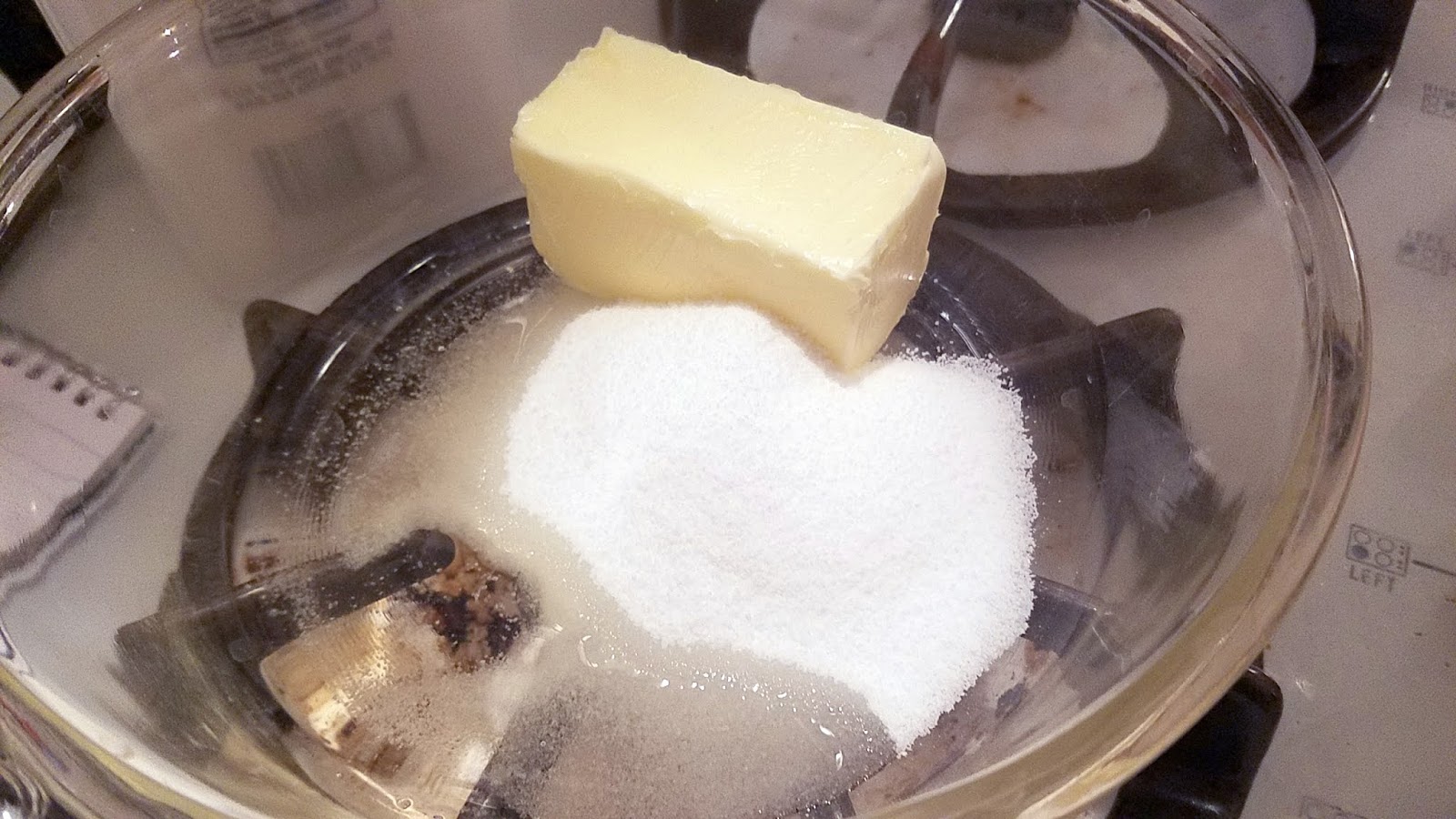
Melt the ice cream and stir in the cake mix.
Pour into the pan and bake about 30 minutes, or until done.

Source: Caker Cooking


You might think we should just throw it out. After all, ice cream is not vegetables or meat or anything that's actually good for you. We're not missing out on any vitamins or something by not eating the rest of this ice cream. But we have often declared how we feel about wasting food:

Rather than throwing the ice cream away, we will transform it into something rich and strange. This recipe comes to us from Caker Cooking, a loving tribute to the many recipes found in community cookbooks that start with "Open one can of soup" and end with "top with crushed potato chips and bake until bubbly." In the first-ever Pieathlon, he made the recipe I sent in. He got this recipe from the comments section of a different ice cream bread recipe he posted.
At first, we thought we might measure about a pint ice cream (viz. the amount the recipe tells us to use) in a mixing bowl and melt it, then we eyeballed the container and figured that about a pint of ice cream remained in it. Furthermore, the rest of the carton would make a decent single-use mixing bowl anyway. And so, the ice cream went into the microwave and emerged permanently changed.

I had a brief moment of airheadedness (or at least a brief moment when my airheadedness became obvious) when I tried a spoonful of the melted strawberry stuff in the carton and said "You know, if we put this in the ice cream freezer it'd make really good ice cream!" Then I tried to pretend I hadn't said that out loud and got out the synthetic cake powder.

The last time we had a close encounter with cake mix, we found that the cake tasted oddly artificial and kind of bad. Or, as our friend we shared the cake with said, "This tastes like shit." We postulated that perhaps I should have used something better than the store-brand cake mix that was a dollar per box. That is probably an incorrect theory, because this is an actual name-brand cake mix and it still has the exact same weird chemical smell when you rip the plastic bag open.
Also, this "batter" was really tough to stir. It bent the spoon back a lot before we gave up and used a bigger one.

Unfortunately, when one determinedly avoids wasting food, one sometimes causes a small waste to become a big one. For example, you may find that your bread is going stale, so you turn it into bread pudding. You then find that the bread pudding tastes terrible and end up throwing it away, meaning that instead of wasting only bread, you've also wasted sugar and fresh eggs. In a similar way, we started off with some ice cream no one was eating. As we stared at the artificially-flavored pink mess we'd mixed together,  we thought we'd turned this into a cake that would go directly from oven to trash, thereby wasting not only the ice cream but also the cake mix we threw in after it.

The batter, if so it may be called, hung and dripped off of the spoon in unnervingly elastic threads. We had to use so much force in mixing it that it seemed the ice cream carton would rip apart before we got all of the cake powder to quit hanging around in clumps and actually mix. 

Do you remember the beef pink slime scandal that went around a while ago? A few people tried to kick off a nationwide outrage that various fast-food places were using meat that looked like this in the factory:
Yes, that is beef.

Anyway, the general reaction from people was apathy and "What did you expect from a one-dollar cheeseburger?"
We mention the pink slime kerfuffle because as soon as we randomly thought about it, today's batter looked particularly unfortunate. Perhaps we should have used a different color of ice cream.
It's not that the batter's pink. The problem is that the batter is a pink that you do not see in nature.

Anyone who's read our previous kitchen misadventures will know we are no strangers to kitchen weirdness. Nor have we ever avoided some very strange substitutions. But this recipe just seemed... odd. It's like, we're not making food, we're slapping together two edible byproducts of the petroleum industry to create a synthetic food-style product.

Furthermore, we were wondering if this would even work. The cake mix tells us to add four eggs (which is quite an extravagance of eggs when you're trying to avoid getting groceries), and here we haven't added any. We checked the ingredient list of the ice cream, and it doesn't have any eggs either. Then again, it's not like we need eggs to keep any oil from separating out because we haven't added any of that either.

Often with cakes and brownies, it doesn't matter if you've done a lousy job of spreading it in the pan because it will go runny and level itself out. Hence the lousy spreading job- we figured it would all even out in the oven. We were wrong.

Now, we had considered icing this until we tasted the batter. Cake mix is already very sweetened, and so is ice cream. So basically we had a bowl of candy. You may be expecting me to therefore say it was overwhelmingly sweet, but if you've ever had seconds and thirds of the fudge platter at Christmas you could eat this and easily love it.

Now, if you think it's bad that our ice cream bread sagged in the middle, when Brian of Caker Cooking tried it, his did too. So if we personally failed at this, we're not the only ones.
This tastes so synthetic that everyone just kept eating it to confirm that it tasted as weird as we thought it did. The texture was oddly similar to angel food cake- it had that light almost-sponginess. It tasted like one of those drive-thru strawberry shakes that we all know contain absolutely no fruit and only trace amounts of dairy. I like those a lot, so I ate more slices of this than I should admit.
I didn't expect this to work, but it does. It's an unexpectedly successful combination of artificial flavors and imitation ingredients that makes a better cake than if you followed the directions on the box. Absolutely everything about this tastes and feels fake, but somehow the fakeness of the ice cream and the fakeness of the cake mix make up for each other's weaknesses and make a masterful tribute to the long industrial drive to take food production out of the kitchen and into the chemistry lab.

Saturday, July 4, 2020

Peanut Butter Drops: or, Peanut butter cookies from before they all looked the same

We at A Book of Cookrye are fascinated by recipes that took a while to become... er... standardized. Take, for example, peanut butter cookies. If you do a quick image search, you find that everyone's peanut butter cookies have a certain... uniformity.

There's a lot of variation to, say, chocolate chip cookies, and even something like brownies will show up regularly with cheesecake-batter swirls or other fun alterations. But, in addition to everybody's near-identical peanut butter cookies, you also notice a peculiar uniformity in photography style. Food photography used to vary widely-- from dramatic theatrical-looking lighting on a black backdrop, to softly-lit still-lifes with lots of figurines and other strange props surrounding the food being demonstrated, to overdressed and elaborate tablescapes. These days, it seems that everyone's food photos are converging into a very uniform look- they are all shot in very soft daylight on a neutral-colored and blurry background, and often with only an extremely small portion of the food in focus while the rest of the photograph becomes an artistic blur.
This brings us to today's recipe! Our new favorite beat-up cookbook has three recipes for peanut butter cookies: one that looks like all the cookies shown above, a recipe for orange-peanut butter cookies, and then one we will make today. We found it really interesting that none of the recipes looked the same. It is fairly common in these community cookbooks to see a whole page of hamburger casseroles that look nearly the same because no one on the cookbook committee wanted to leave anybody out. Is there a reason that none of the other,  shall we say,  non-standard cookie recipes get handed around anymore?
Anniversary Slovak-American Cookbook, 1952


Peanut Butter Drop Cookies
2 c flour
¾ tsp salt
2 tsp baking powder
¾ c shortening*
½ c peanut butter
1 c brown sugar
2 eggs
¼ c milk
1 tsp vanilla
¾ c raisins, chopped

Heat oven to 375°. Grease a sheet pan.
Cream shortening, sugar, peanut butter, salt, and baking powder until light and fluffy. Beat in the eggs one at a time, mixing well after each. Add the vanilla with one of the eggs. Add the flour alternately with the milk, beating until smooth. Fold in the raisins.
Drop from a teaspoon onto the baking sheet. Flatten with a fork. Bake 7-10 minutes, or until done.

*I used butter and it was fine.

Source: recipe by Mary Salat (of Chicago, Illinois), Anniversary Slovak-American Cook Book, First Catholic Slovak Ladies' Union, 1952

First of all, we've never seen peanut butter cookies that you just plop onto the pan instead of carefully shaping one dough-ball at a time. Second, aside from a few people who stir in peanuts (or, if you're really daring, chocolate chips!), no one adds anything to peanut butter cookies. Today's recipe has a very polarizing ingredient:
Did you really think I would put raisins on a cutting board and attempt to chop them with a knife?

Yes indeed, today we are improving our peanut butter cookies with raisins! I will never get over how passionately people hate raisins in baked goods. With other things, people may say "I don't really like coconut in cakes" or "Eh, poppy seeds are okay on a bagel I guess" or (and I include myself in this one) "I honestly don't like nuts in brownies." But raisins in cookies are like pineapples on pizza. No one merely dislikes them, but they absolutely despise them and will shout about it.
But let's set those aside for a moment and move on to things everyone likes in cookies: butter and sugar!

Now, we at A Book of Cookrye are no strangers to halving or quartering recipes. When you like trying the weird and forgotten recipes that time has tried to hide from us, you soon learn to cut them down to as small a quantity as possible because you never know when you'll be blenderizing peanut butter into vegetable soup because Disney told you to.
With the perils of trying strange recipes in mind, meet our new friend in cooking: the one-eighth measuring cup. We never thought we'd use it when we first rummaged through the drawers a few recipes ago. But when you cut recipes down a lot, you will use one of these more than you ever thought you would.

At this point, our cookies looked like cake batter. Of course, drop cookies are always a bit runny (otherwise they wouldn't spread into delicious cookies but would instead bake into hardened dough clods),  but this is the first time we've seen it with peanut butter cookie dough. When we tried it, it was odd to taste peanut butter cookie dough in the form of cake batter. It's like when we were treated to a wedding-cake flavored snow cone: it's like the flavor was transplanted into somewhere it didn't belong.

Here we veered off recipe a tiny bit. See that brown flour? That means these cookies are good for you. If we're allowed to say sweet potato fries are so much healthier than French fries, then using brown flour instead of white makes these cookies a nutritional bounty. Or at least, they are as good for you as granola and muffins. (In all seriousness, I stopped bothering with granola after reading the labels. It's basically oatmeal cookies without the flour and eggs. I'd rather have a real dessert.)

I don't know what I expected, but it looked like slightly runny peanut butter cookie dough. Which I guess is what we're going for...? I've never made any peanut butter cookies besides the ones you roll into little balls and press with a fork to get those cute lines on top. This doesn't look like batter, but it doesn't look like dough either. It looks like one of those recipes where you're supposed to shape it in your hands, but you messed up somewhere and now it's just a little bit too gloppy to do anything with.

Speaking of things looking messed up, it is now time to bring forth the raisins that have been waiting patiently ever since we snipped them. Chopping raisins is one of the things that really dates this recipe- no one does that anymore.
Before you argue that I should never sully the beautiful cookies with the icky raisins, consider that peanut butter and jelly go together like... well... peanut butter and jelly. And grape jelly graces more sandwiches than any other kind. As we all know, raisins are dried grapes. Now, the two main ingredients of grape jelly are grape juice and sugar (or high-fructose corn syrup). So, we've got a crapton of sugar in the cookie dough , and we have grapes (even if they've gone a bit pruny). Combine this with the wheat flour, and you basically have a peanut butter and jelly sandwich with all the ingredients rearranged (and also some butter that got in there for bonus butteriness). Peanut butter and jelly sandwiches are delicious, so this cannot possibly go wrong.

Also, if you're still traumatized from that one time when you were a wee tot and you thought the cookies had delicious chocolate chips until you bit one and found icky slimy raisins (a surprisingly universal experience), maybe you'll feel better after seeing that I cut these so fine you can barely see them once we've stirred things a bit.

I mean, even if this recipe's a bit weird, at least it looks like it's going according to plan. By which I mean drop cookies typically look like this unless you have one of those cute little cookie scoops. The only thing off about them (unless the raisins irk you) is the peanut butter-like shade of brown. That is not a color I am used to seeing in drop cookies.
This picture unnerves me more than it should.

Now, the recipe tells us to press them with a fork, which seemed utterly pointless when these were sticky blobs. But we tried anyway so that we could blame Mary Salat of Chicago if anything went wrong, saying "I followed all your directions and this happened!"
You can see a few grooves incised into the little plops of dough, but not the adorable crisp lines we're all accustomed to today. Maybe we're pressing the dough with a fork because everyone knows that Peanut Butter Cookies Have Those Fork Lines Pressed On Them. It's not a snickerdoodle unless you rolled it in cinnamon, and it's not a peanut butter cookie unless you've pressed that adorable grid on top. You might think the dough needed just a little starting push to help it spread out and that it wouldn't stick to a fork the way it would have glued itself to, say, the bottom of a cup. But we really didn't get these any flatter than they were before.

Either our oven runs hot or Mrs. Mary Salat's oven ran cold. We set the timer for ten minutes just like the recipe says, and in eight minutes the delicious smell of baking that suffused the kitchen developed a distinct burnt tinge. We checked in on the oven and found that all of the cookies had that little nearly-black ring of burnt around the edges.

Maybe you don't think it looks too bad in the above photo. Maybe you think "Oh, they're just a bit toasty on the outside!" Well, here's a merciless closeup of how I have still never learned to occasionally peep through the oven window when baking.

We couldn't waste an entire batch of cookies, so we hastily trimmed off the worst and hoped for the best. While the cookies were still hot, it was as easy as cutting up brownies. But as the cookies cooled, they got a lot more brittle. We feared that even the not-burnt regions had gotten baked until too hard.

 As you can see, these cookies were nearly very cute. If we hadn't burned them, they would have been adorable little brown peanut butter confections that were shaped exactly like muffin tops. Instead they looked like someone who barely knew which end of the knife goes in your hand and which goes in your food tried to cut them up.

These cookies are interesting. Usually peanut butter cookies are really dense, but these were more light. Chopping the raisins made them kind of disappear and leave the taste behind. You couldn't detect them, but the taste was all over. Imagine if you could buy raisin extract the same way you buy vanilla. People were divided over whether the raisins were any good or not.
Also, these cookies do not go stale. They ripen. After a day or so, they got denser and were very like the peanut butter cookies we're all accustomed to. Except with raisin flavor throughout.I know a lot of you lovely people dislike raisins, but if you leave them out you'll have lovely peanut butter cookies that have just a bit lighter texture than we're used to nowadays. These actually were like a peanut butter version of the depression-era cookies we've made a time or two. My only warning is that since these are just a bit lighter, it's easy to forget how many you've eaten.

Wednesday, July 1, 2020

Shortbread when you're running out of butter!

Shortbread is one of those recipes that people get very protective about. Some things like brownies can undergo tremendous change (and I don't just mean stirring in wacky things like gummy bears, but fundamental recipe alterations) without people squawking "It's not a brownie anymore!" Other things like grilled cheese get a devoted fanbase that comes out angrily typing as soon as you add a slice of tomato that you've changed it into something completely different! Shortbread is the same way- stir in a half-handful of chopped prunes into an otherwise unchanged recipe and there will readily be a swarm of angry food snobs insisting that it's not shortbread anymore. We at A Book of Cookrye wonder about those people. Is anyone really enjoying their food if they can so readily throw an angry typographical tantrum over a minor change?
Moving back to cookies, most people will insist that shortbread should start with exactly these two ingredients.

But perhaps one lacks the full recipe's allotment of butter. Here, being too much of a purist to go on means you will not get any cookies. We at A Book of Cookrye could wait for the next grocery expedition and be cookie-deprived in the meantime, or we could just dump in a puddle of oil and hope the partial stick of butter hid our subterfuge.

Butter-Scrimping Shortbread
6 tbsp butter
¼ c sugar
2 pinches salt
2 tbsp oil
1 tsp almond, lemon, or vanilla extract
1¼ c flour

Heat oven to 300°. Grease a cookie sheet.
Cream the butter, sugar, and salt until nice and light and airy. Beat in the oil and vanilla (or flavoring(s) of your choice), mix well. It should be nice and fluffy. Add the flour, gently mixing just until thoroughly blended.
Roll the dough into small-to-medium balls. Place on the cookie sheet and press to desired flatness. They will spread and thin a little bit, but not very much. You can try rolling the dough balls in sugar, but it won't stick very well. If you would like them to have a bit of sugar baked on top, sprinkle a pinch onto each cookie after you've pressed it flat and gently pat it into the dough.
Bake about 20 minutes, or until the bottom is a deep, rich golden color.

Yes, we've replaced about a quarter of the butter in Mom's cookie recipe with oil because we used part of the butter to make a batch of gravy. We weren't leery about using oil necessarily, but this particular bottle of oil has been in the pantry for a while and we couldn't tell if it was beginning to go rancid or not. But when we tried a bit of it on a tiny spoon, we did not experience that reflexive revulsion that comes from eating rancid food.

Using oil gave us one unforeseen difficulty: the butter broke up into little lumps that slipped and slid around in the oil and refused to actually mix in. It felt less like combining ingredients and more like chasing them as they dodged the spoon.

We easily fixed this by switching to a whisk and heeding the advice of Our Patron Saint of Cookrye, Fanny Cradock. We thought of someone we've never really liked but we're too well-bred to say so, and then beat everything in the bowl until it was not just well-mixed but astonishingly whipped up. Like, the butter's barely even yellow anymore, it's more of an off-white. We couldn't tell if the oil added an unnerving undertaste or if we were imagining it after worrying that we'd ruined everything by an ill-fated substitution.

We were more than a little curious how these would come out post-cooking. Would they remain a bit melty since butter re-solidifies at room temperature and oil does not? Would they taste normal? Reassuringly, the cookie dough looked just like the dough for this recipe is supposed to: like beige Play-Doh.

We didn't have the patience to clean the counter after rolling this out and cutting it into various adorable shapes. So we're going with the easier way that doesn't involve digging out a rolling pin and finding a big enough acreage of counterspace.

We weren't sure how much these would spread, and therefore did not know how much to flatten them. If we pressed them flat, would they spread like chocolate chip cookies do, leaving us with thin little patties? If we left them in balls to allow for lots of spreading, would they firmly hold their original shape and emerge from the oven as awkward-to-bite-into cookie balls? Unsure of the better option, we kinda flattened them a little bit and sent them ovenward.

It turns out that no, they don't really spread at all. You could roll them out, cut them with cute shapes, and you wouldn't have to worry about the dough melting into blobs while it baked. They did get really puffy though.
 

This was a surprisingly good success! We had feared the cookies would be greasy or otherwise sad to eat, but they were surprisingly light and delicate. They were almost indistinguishible from oil-free cookies, except they were just a tiny wee bit softer and airier when you bit into them. In conclusion, if you would like to make a treat for yourself but it's a bit tricky coming up with everything (or if you do have all the things but want to make things last longer), you can swap oil for about a fourth of the butter in a cookie recipe and things will be fine. And then you will have cookies!

Friday, June 26, 2020

Brownies!

Today, we at A Book of Cookrye desired variety in our lives! Because of the intermittent grocery shortages and general laziness, most of our suppers have been variations of the classic "Throw what's on hand into a pan and come back when it's baked" style of cooking, and decided we want dessert! Maybe in the future we'll look fondly back at this time when you had to be creative when planning meals around what was available and what was on sale, but right now we want chocolate.
Anniversary Slovak-American Cook Book, First Catholic Slovak Ladies' Union, 1952

Chewy Brownies
¾ c butter (or margarine)
1 tsp baking powder
¼ tsp salt
1¼ c sugar
½ c brown sugar
3 eggs, separated
4 oz unsweetened chocolate*
2 tsp vanilla
1 c flour

Heat oven to 350°. Grease a 9"x13" pan. Melt the chocolate and set aside to cool.
Beat the butter until creamy. Add the sugars and beat until light. Beat in the chocolate. When mixed, add the egg yolks (adding them separately prevents cooking the eggs if the chocolate wasn't cool enough) one at a time. Add the vanilla when all is mixed, beat well. Add the flour and beat until smooth.
Spread into the pan and bake 40 minutes. Cut while warm and remove from the pan after they cool.

*If desired, you can use cocoa powder instead of baking chocolate. Add an extra quarter cup of butter to the recipe (or use shortening, margarine, or cooking oil). When beating in the sugar salt and baking powder, add also ¾ c cocoa powder.

Source: Rose Sabol (of Whiting, Indiana), Anniversary Slovak-American Cook Book, First Catholic Slovak Ladies' Union, 1952

Because we haven't gone to the grocery store in a while, we had to fudge the recipe just a little bit. We already knew we were going to use cocoa powder instead of baking chocolate because it has such a long shelf life. Baking chocolate can go rancid after a few months (especially if the house isn't always kept cool), but cocoa powder can last years. It generally doesn't get the chance to demonstrate its longevity in our presence, but a can of that magical brown fairy-dust lasts through so many more creations than a box of baking chocolate squares. Ever since the Baker Company cut their chocolate boxes in half (which we are still irked about), a recipe like this would have literally used up a whole package.

We must admit we're fudging here and using margarine instead of butter, which is something we do a lot in brownies anyway. But we nearly ran into a brownie-cancelling halt: there wasn't enough margarine. We added cooking oil to make up for the deficiency. We figured it'd be fine since that's what brownie mixes use. Also, it's still mostly butter (or a decent imitation). You probably won't notice the difference once we get chocolate on it.

Rose Sabol of Whiting, Indiana seems to have put a lot of thought into this recipe. Most brownie recipes we see just have you dump all the ingredients in a bowl (or sometimes right into the pan). Rose Sabol, on the other hand, has decided that she wants a little brown sugar flavor but not too much. Most recipes will just do half brown and half white sugar, but today we are adding just a smidge of brown. I can only assume that this was arrived at after careful deliberation in the Sabol kitchen.

Also of note: this recipe actually has leavening from whipped egg whites. We've only seen one other brownie recipe that did that, and it was in a Betty Crocker handout. Out of curiosity, we checked to see if we were making the same recipe (with perhaps a few alterations over the years). After all, a lot of these community cookbooks have recipes that come directly from ingredient labels or from magazine ads. Even today, when copyright law is more enforced than ever, it seems that food companies have unofficially decided not to sue groups like the West Puskahosee Methodist Ladies' Auxiliary for including company-developed and copyrighted recipes in their community cookbooks. Anyway, despite having an odd similarity in the directions, this recipe is not the one from the Betty Crocker handout from 16 years earlier.

Anyway, we got this beaten good and well. We had a happy bowl of buttery, sugary goodness, whipped to airy perfection. What better landing place could there be for our wonderful chocolate?

A lot of today's recipe may be altered due to shortfalls of key ingredients, but we were still super excited about this magical moment when the chocolate met the batter. It's that magical moment when the bowl of delicious batter becomes something beautiful. Something divine. Something full of chocolate.

We were perhaps a teensy bit too excited at bringing more chocolate into our lives. With one overenthusiastic stroke of the spoon, we made a mess of the cocoa powder. If you've read about any of our previous culinary perpetrations, you'll know that this happens a lot.

Well, after that brief detour with a wet rag, let's see the amazing delight that awaits us in the bowl! It really looks like it's made with the richest and best ingredients rather than a lot of second- and third-choice substitutions based on what was on hand. Better yet, it tasted like we had made it exactly according to the directions with all the real butter and chocolate squares the Slovak-American Ladies' Union could have dreamed of.
 

And so, we get to the whipping-up of the egg white. Here we must register surprise. The exact model of mixer we once had (before it fell from its precarious shelf and never turned on again) appeared when we rummaged in the drawer! Here is mine before it tragically fell and broke, seen when we were testing the theory that you can substitute Diet Coke for eggs:
I still miss this thrift-shop-found friend and regret that it fell off what little shelf space I had in my room at the time.

It's always a bit of a hunt to find all the pieces of an appliance when it's long been disused. You can generally assume that if the motor turned up in a drawer, the rest of the attachments will probably be somewhere. Very few people keep a food processor motor base and throw out the blades. But when you're using an appliance that hasn't been plugged in for a few decades, the pitchers, beaters, blades, or whatever's supposed to go with it may lie in a very remote place, buried under strata of things that were never gotten rid of. In kitchens with enough storage space to forget things, the old appliances may be layered by the decade, as replacements and upgrades were purchased but someone said "We can't throw the old one away! It still works!"
We eventually found the beaters for this mixer buried in the back of a different drawer and it was like an unexpected and very welcome reunion between self and appliance.


I still find it unusual that we're supposed to do anything that involves skill in a brownie recipe. Most of the brownie recipes I've seen, whether they're very old or whether they came out this year, are extremely easy to make. In fact, they are so easy that the existence of brownie mix actually confounds me. It's almost as if most recipe creators intended brownies to be for those who never learned to bake but want to make something delicious. In that sense, brownies are a bit like the casseroles of desserts: if you can get all your ingredients into the same pan, you will almost certainly get what you wanted after baking. We therefore find it strange that today's brownie recipe requires you to have that practiced knack of carefully folding in egg whites without deflating them.

To our amazement and surprise, that one whipped egg white turned a bowl of chocolate clay into a beautiful, creamy, dreamy, amazing delight that makes you want to just get out a ladle and eat. If Rose Sabol of Whiting, Indiana made recipes that looked this good, she better have gotten all the respect she deserved for her baking. Just look at this pan of chocolate divine!

Spread into the pan, it looked less like uncooked batter and more like a delicious chocolate mousse. I swear, one day I am going to put a batch of cake or brownie batter into an ice cream freezer instead of an oven and see what happens.

You know how we said we didn't want to bake this because the batter was so good? When we saw this desiccated-looking pan of brown come out of the oven, we suspected that we shouldn't have. "The batter was so delicious!" we said to ourselves. "Why did it have to go in the oven?" 

But our fears were assuaged when we cut these open and saw the inky black that lay below. Not that baking improved the batter, but it at least didn't make it worse.


As soon as we bit into one, we forgave Rose Sabol of Whiting, Indiana for making us bake these after mixing them. They are marvelously chocolaty, and somehow simultaneously light and airy yet wonderfully dense. It was like a very light cake that somehow turned to fudge while you ate it. This recipe may involve a few more bowls than most brownie recipes do, but you owe it to yourself if you love chocolate.